
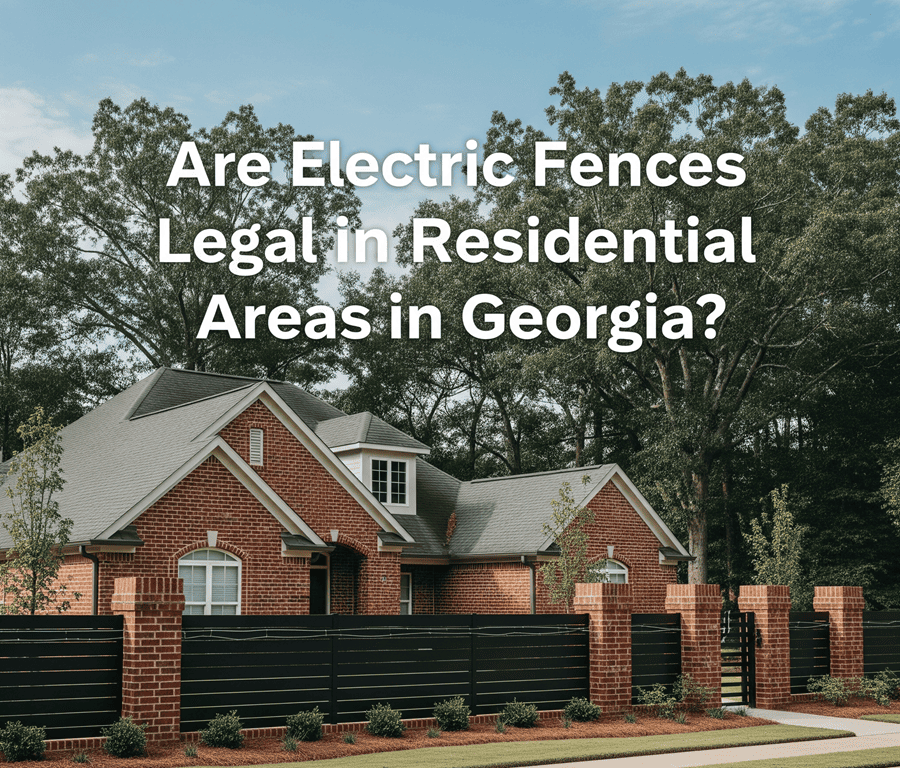
Thinking about putting up an electric fence in your Georgia backyard? It’s a good idea to know the rules before you start digging. While Georgia doesn’t have a single, statewide law that covers every fence, your city or county definitely does. Plus, your neighborhood association might have its own say. We’re going to break down what you need to know about electric fences in residential areas in Georgia, so you don’t run into any trouble.
Key Takeaways
- Georgia doesn’t have statewide laws for fences, so local city or county rules are what matter most. Always check with them first.
- Electric fences are generally not allowed on residential properties smaller than three acres.
- If an electric fence is permitted, you’ll likely need to put up warning signs and limit the fence’s power (wattage).
- Besides state and local rules, your Homeowners Association (HOA) might have its own regulations about fences, including electric ones.
- Getting a building permit might be necessary, depending on your location and the fence project’s specifics. Not getting one could lead to fines or a stop-work order.
Understanding Georgia’s Electric Fence Regulations
So, you’re thinking about electric fences in residential areas in Georgia? It’s a bit of a mixed bag, honestly. While Georgia doesn’t have a blanket statewide law saying ‘yes’ or ‘no’ to electric fences everywhere, the real story is in the local details. Many cities and counties have their own rules, and sometimes, your Homeowner Association (HOA) might have even stricter guidelines. It’s not as simple as just buying one and plugging it in.
Statewide Laws Versus Local Ordinances
When it comes to fences, Georgia generally lets local governments handle the specifics. This means what’s okay in one town might be a big no-no in the next. You absolutely need to check your local city or county ordinances before you even think about installing an electric fence. Don’t assume anything. The state doesn’t provide a single set of rules for electric fences, so the burden falls on you to find out what your specific area allows. Companies like FenceWorks of Georgia often deal with these local regulations, so they can be a good resource.
The Role of Homeowner Associations
Beyond city and county rules, your HOA can add another layer of regulations. Many HOAs have covenants that dictate fence types, heights, and materials. If your HOA prohibits electric fences, it doesn’t matter what the city says; you’ll still be in violation of your HOA rules. It’s always best to obtain a copy of your HOA’s rules and review them carefully, or contact the HOA board directly if you’re unsure.
Here’s a quick rundown of what to look out for:
- Local Ordinances: These are the primary rules set by your city or county. They often address fence height, placement, and whether electric fences are permitted.
- HOA Covenants: If you live in a neighborhood with an HOA, its rules are binding and can be more restrictive than local laws.
- State Laws: While less common for specific fence types like electric ones, always be aware of any overarching state property laws that might apply.
It’s easy to get caught up in the excitement of a new fence, but taking the time to understand all the rules up front can save you a lot of headaches, fines, and even the cost of having to remove a fence that isn’t allowed. Doing your homework is key.
Key Considerations for Electric Fence Installation
So, you’re thinking about putting up an electric fence? Before you get too far into planning, there are a few things you really need to think about. It’s not just about buying materials and sticking them in the ground. Georgia has some specific rules, and even your local town or county might have its own take on things. Plus, if you’re part of a homeowner’s association, they probably have their own set of guidelines too.
Property Size Limitations
This is a big one, especially for electric fences. In Georgia, if your residential lot is smaller than three acres, you’re generally out of luck when it comes to installing electric fences. It seems like the state wants to keep these types of fences for larger properties. So, if you’ve got a smaller yard, you’ll likely need to look at other fencing options.
Wattage and Signage Requirements
If your property meets the size requirements and electric fences are permitted, there are still rules to follow. You can’t just hook up any old power source. There are limits on the wattage you can use, meaning how much ‘oomph’ the fence has. This is all about safety, of course. Along with that, you’ll need to put up clear signs warning people that the fence is electric. These signs must be visible and state the danger clearly. It’s a way to let visitors, delivery people, or even just curious neighbors know what they’re dealing with.
Prohibited Materials for Residential Lots
While this section focuses on general fencing, note that certain materials may be restricted, especially in front yards. Think chain-link fences – many places don’t allow them at the front of your property. They often prefer something more ornamental, like wrought iron or vinyl. For electric fences, the main restrictions are often tied to property size and the type of wire used, but it’s always good to double-check whether any specific materials are banned by your local codes.
It’s always a good idea to get a copy of your property deed. This document usually has the official measurements for your property lines. If you can’t find it, or if things are unclear, hiring a land surveyor is the best way to get definitive boundaries. This step alone can save you a lot of headaches and potential disputes down the road.
Here’s a quick rundown of what to keep in mind:
- Check Local Ordinances: Your city or county will have specific rules. Don’t assume what’s okay in one town is okay in another.
- Consult Your HOA: If you have a homeowner’s association, their rules might be even stricter than the local government’s.
- Understand Wattage Limits: If electric fences are allowed, know the maximum power output permitted.
- Signage is Mandatory: Proper warning signs are a must for safety and legal reasons.
Navigating Local Zoning and Building Codes
Alright, so you’re thinking about putting up a fence, maybe even an electric one, in your Georgia backyard. Before you get too far into picking out styles or figuring out where the posts go, you’ve got to get a handle on what your local town or county actually allows. Georgia doesn’t have a single, statewide rulebook for fences that covers every single detail, which means the rules can change quite a bit depending on where you live.
Permit Requirements for Fencing Projects
First things first, you’ll likely need to check if a permit is even necessary for your fence project. For most standard fences, especially those under a certain height, you might be in the clear. However, if you’re planning something more substantial, like a tall privacy fence or a masonry wall, you’ll probably need to get the green light from your local building department. It’s always better to ask and obtain a permit when needed, rather than face fines later.
- Check with your local building or planning department.
- Permits are often required for fences over a certain height (like 8 feet).
- Masonry or concrete walls that act as fences usually need permits, even if they’re shorter.
Fence Height Restrictions in Residential Areas
This is a big one. Most places have specific rules about how tall your fence can be and where you can put it. Generally, fences in the front yard tend to have stricter height limits than those in the backyard. Think of it this way: the front yard is more visible to the street and neighbors, so they often want it to look a certain way.
Here’s a general idea of what you might find:
- Front Yard Fences: Often limited to around 4 feet tall. They might also need to be more decorative, using materials like pickets or split rails. Chain-link fences are usually a no-go in front yards.
- Side and Rear Yard Fences: Typically allowed to be taller, often up to 8 feet. These are usually less restricted in terms of style.
- Corner Lots: These can be tricky because they have two sides facing streets, meaning both sides might be considered ‘front yards’ with those stricter rules.
Acceptable Fence Materials and Placement
Beyond height, local codes will also dictate what materials are okay and where you can build your fence. You can’t just put a fence anywhere. For instance, you generally can’t build in the street right-of-way, which is that strip of land between the curb and your property line. Also, keep an eye out for drainage easements – these are areas set aside for water to flow, and building in them can be a big problem.
Building within a drainage easement often requires special permission, and even then, there might be restrictions on what you can put there. It’s all about making sure water can move freely when it needs to, and a solid fence could block that.
- Property Lines: While you can often build right up to your property line in the back or sides, some areas might require a small gap. It’s a good idea to leave a little space anyway for maintenance.
- Easements: Avoid building in drainage or utility easements unless you have explicit written permission. These are usually marked on property plats.
- Street Right-of-Way: Fences are almost never allowed in this area. It’s typically a strip of land extending from the curb into your property.
Ensuring Compliance and Avoiding Penalties
Putting up a fence, especially an electric one, can feel like a big project. You want it to work right and, more importantly, you want it to be legal. Nobody wants to deal with fines or, worse, having to take down a fence they just put up. So, how do you make sure everything is above board?
The Importance of Property Line Definition
This is a big one. Before you dig or order materials, you need to know exactly where your property ends and your neighbor’s begins. Having a professional survey conducted is the best approach. Relying on old fence lines or guessing can lead to serious headaches. If your fence accidentally creeps onto your neighbor’s land, that section technically belongs to them. It’s also a good idea to leave a little buffer zone between the property line and your fence. This gives you space to do maintenance without stepping foot on someone else’s property.
Consulting with Neighbors and Professionals
It’s not just about the law; it’s about being a good neighbor too. A quick chat with the folks next door can prevent misunderstandings down the line. They may have concerns, or they may be willing to share the cost if the fence sits right on the line. Beyond your neighbors, don’t shy away from the pros. Local building departments and experienced fence installers know the ins and outs of zoning laws, permit requirements, and any specific rules about electric fences in your area. They can help you avoid costly mistakes.
Consequences of Non-Compliance
So, what happens if you just wing it? Well, it can get messy. You might get a notice to stop work, meaning your project grinds to a halt. Fines are definitely on the table, and they can add up. In some cases, you could be forced to remove the fence entirely, which is a huge waste of time and money. Plus, there’s the potential for neighborly disputes that can drag on and be really unpleasant. It’s just not worth the risk when a little planning goes a long way.
Here’s a quick rundown of what could happen:
- Stop-work orders: You might be told to halt construction immediately.
- Fines: Local authorities can issue penalties for violations.
- Removal orders: You may have to tear down the fence.
- Legal disputes: Neighbor disagreements can escalate.
- Permit denial: Future building projects could be harder to get approved.
Specific Rules for Electric Fences in Georgia
When it comes to electric fences in Georgia, things get a bit more specific, especially if you’re thinking about putting one up on a smaller piece of land. It’s not a free-for-all, and there are definitely some rules to keep in mind.
Restrictions on Electric Fences for Smaller Properties
One of the key points is that electric fences are generally not permitted on residential lots under 3 acres. This is a pretty firm rule across the state. So, if your property is on the smaller side, you’ll likely need to look at other fencing options. It’s all about making sure these types of fences aren’t installed where they could pose an unnecessary risk.
Mandatory Safety Measures for Electric Fences
If your property does meet the acreage requirement and you’re permitted to install an electric fence, there are still safety protocols you absolutely must follow. Think of these as non-negotiables:
- Signage: You’ve got to put up warning signs. These signs need to clearly indicate that the fence is electric and potentially dangerous. They should be visible and placed at regular intervals.
- Wattage Limits: There are limits on the amount of electrical power (wattage) you can run through the fence. This is to keep the shock at a level that’s a deterrent, not a serious hazard.
- Material Restrictions: Certain materials might be prohibited for use in the construction of the fence itself, especially if they could conduct electricity in unintended ways.
When Electric Fences Are Not Permitted
Beyond the acreage rule, there are other situations where electric fences are a no-go. Local ordinances may impose additional restrictions, so always check with your city or county. Sometimes, even if technically allowed by the state, a specific neighborhood or HOA might have rules against them. It’s also worth noting that if a fence interferes with utility access or easements, that could be a problem too. Basically, if it’s not safe, clearly marked, or allowed by local rules, you can’t have it. For any major fence projects, it’s a good idea to get your property inspected to ensure everything is up to code before you start.
Always double-check with your local building department and any homeowner’s association before making any decisions about electric fencing. What’s allowed in one town might be strictly forbidden in another, and ignoring these rules can lead to fines or having to remove the fence entirely.
When putting up electric fences in Georgia, there are some specific rules you need to follow. These rules help ensure the fences are safe and function as intended. It’s important to know these guidelines before you start building. For a complete rundown of Georgia’s electric fence laws and to get expert advice, visit our website today!
So, Can You Put Up an Electric Fence in Georgia?
Alright, so after all that, what’s the final word on electric fences in Georgia backyards? Basically, it’s not a simple yes or no. While Georgia itself doesn’t have a statewide ban, your specific town or county absolutely can. We saw that lots of places have rules about fence height, materials, and where you can put them. For electric fences, it’s even trickier. Many areas flat-out say no, especially on smaller residential lots under three acres. If yours is allowed, you’ll likely need to put up warning signs and keep the power level pretty low. The biggest takeaway here? Always, always check with your local city or county government before you even think about buying an electric fence. Skipping that step could land you with a hefty fine or, worse, make you take the whole thing down. Better safe than sorry, right?
Frequently Asked Questions
Are electric fences allowed everywhere in Georgia neighborhoods?
Not exactly everywhere. While Georgia doesn’t have a statewide ban on residential electric fences, many towns and counties have their own rules. It’s super important to check with your local city or county government before putting one up, especially if your property is smaller than three acres, as these smaller lots often can’t have electric fences.
What are the rules for fence height in residential areas in Georgia?
Generally, fences in backyards can be up to six feet tall, but front yards usually have a lower limit, often around four feet. Some places might allow taller fences if there’s a good reason, like blocking noise. Your Homeowners Association (HOA) might also have its own, possibly stricter, rules about how tall your fence can be.
Do I need a permit to build a fence in Georgia?
It really depends on where you live. Some cities or counties require a permit for almost any fence project, while others only need one if the fence is over a certain height (like 8 feet) or if it’s in a special area. It’s best to ask your local building department to be sure, so you don’t get in trouble.
What materials are usually okay for fences in Georgia neighborhoods?
For the front of your house, many jurisdictions prefer fences made from decorative materials like wood, vinyl, or metal. Chain-link fences are often not allowed in the front yard. For the back and sides, you might have more options, but it’s always smart to check local rules and your HOA guidelines.
What safety rules apply when installing an electric fence?
If electric fences are allowed on your property, you’ll likely need to put up clear warning signs so people know it’s there. Also, there are usually limits on how much power (wattage) the fence can have to make sure it’s not dangerously strong.
What happens if I put up a fence that doesn’t follow the rules?
Installing a fence that violates the rules can lead to problems. You might have to pay fines or even be forced to take the fence down. It can also cause arguments with your neighbors, so it’s always better to figure out the rules first and make sure your fence is built correctly.