

What does it mean when coyotes are howling?
Ever heard that eerie sound echoing through the night and wondered, “What does it mean when coyotes are howling?” It’s more than just noise; it’s their way of talking. Coyotes use a whole range of sounds, not just howls, to get their messages across. Sometimes it sounds like a whole pack is out there, but often it’s just a couple of them creating a big sound. They’re pretty smart about it, too, and their body language adds another layer to what they’re trying to say. Let’s break down what all that howling might mean. 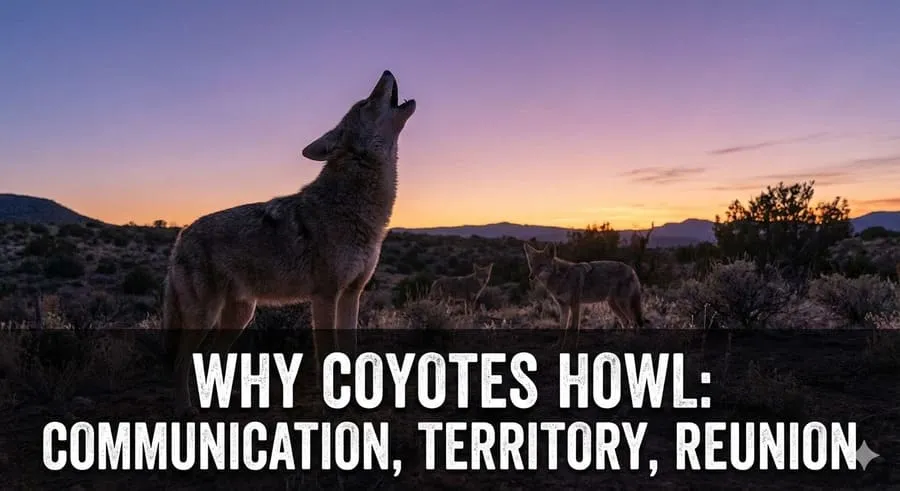
Key Takeaways
- Coyote howls are a primary way they communicate, used for calling their family group together, marking territory, and warning others away.
- They don’t just howl; coyotes also bark, yip, growl, and whine to convey different messages, from threats to friendly greetings.
- What sounds like many coyotes howling at once is often an auditory illusion; a few individuals can create a chorus that sounds much larger.
- Coyotes can tell individual voices apart, recognizing members of their own pack versus outsiders.
- Hearing coyotes howl is usually normal and not a cause for alarm, and they typically don’t howl at the moon or as a celebration after a kill.
Understanding Coyote Vocalizations
Coyotes, often called “song dogs,” have a surprisingly complex way of communicating. It’s not just random noise; their sounds are packed with meaning for other coyotes. While we might lump most of their noises into “howls” or “yips,” there’s a lot more going on. Their vocalizations are a rich tapestry of emotional output, conveying everything from territorial claims to social bonding.
The Language of Howls and Yips
Coyote sounds can range quite a bit. You’ve got your rougher noises like growls, snarls, and barks. These usually signal that a coyote is unhappy, angry, or issuing a warning. If you hear a high-pitched sound that sounds urgent, it’s likely in this “not happy” category. On the flip side, there are the more melodic sounds – the sing-songy howls, yips, whines, and squeals. These higher, smoother sounds often indicate happiness, contentment, or friendly greetings. It’s pretty amazing how they use their mouths, lips, and tongues to create such a variety of tones and modulations, sometimes even adding warbles or trills. These unique combinations can even create signature sounds for individual coyotes, much like how we recognize different people’s voices.
Beyond Howling: Other Coyote Sounds
While howling gets a lot of attention, coyotes use a whole spectrum of sounds. They bark, whine, yelp, and even make raspy noises. These sounds aren’t just random; they’re tied to specific situations. For instance, a series of barks might signal alarm or agitation, while softer whines could be used between family members. Understanding the context is key to figuring out what they’re trying to say. It’s like learning a new language, where the same sound can mean different things depending on how and when it’s used.
The Role of Body Language in Communication
It’s easy to focus just on what we hear, but coyotes rely heavily on body language too. Eye contact, facial expressions, and posture play a huge role in their interactions. A flick of the tail, the position of the ears, or a subtle shift in stance can communicate a lot without a single sound. Often, vocalizations are accompanied by these visual cues, reinforcing the message. So, when you hear a coyote, try to observe their body language if possible; it’s a big part of the conversation. For example, a coyote might use a specific vocalization while also flattening its ears and tucking its tail, clearly indicating submission or fear. This combination of sound and posture paints a much clearer picture of their emotional state and intentions. If you’re thinking about how to manage interactions with wildlife on your property, understanding these signals can be helpful, much like selecting the right fence material helps define boundaries.
Coyotes don’t have a strict, word-for-word language as humans do. Instead, their sounds are more like emotional expressions that other coyotes can easily interpret. Their family life is super important to them, so most of their communication is about keeping things smooth within the pack.
Why Do Coyotes Howl?
So, you’ve heard that distinctive sound echoing through the night. It’s easy to wonder, “What does it mean when coyotes are howling at night?” It’s not just random noise; coyote howls are a complex form of communication, serving several important purposes for these adaptable canids.
Calling the Pack Together
One of the primary reasons coyotes howl is to keep their social structure intact. If a coyote has been out hunting alone or gets separated from its group, a howl can serve as a beacon, calling its pack members back together. It’s like a long-distance phone call, letting everyone know where to regroup. This is especially important after a successful hunt, where the pack might have dispersed to bring down prey.
Announcing Territorial Boundaries
Coyotes are quite territorial, and howling is a way they mark their turf. When a coyote or a group of coyotes howl, they’re essentially sending a message to other coyotes in the area: “This is our space, and you’re not welcome here.” This auditory fence helps prevent conflicts by letting neighboring packs know where the boundaries lie. It’s a way of saying, “We’re here, we’re established, so find your own territory.”
Reuniting After Hunts
Following a hunt, especially a successful one, coyotes often engage in group yip-howls. This isn’t just a celebration; it’s a way for the pack to reaffirm their bonds and reconnect after the intense activity of the hunt. These communal howls can strengthen their social ties and reinforce their identity as a cohesive unit. It’s a sound that says, “We did it together, and we’re still a team.”
While the sound of a coyote howl might seem eerie, it’s a vital part of their survival and social life. Understanding these vocalizations helps us appreciate their complex communication system and their place in the ecosystem.
If you hear coyotes howling, it’s generally best to keep your distance and observe quietly. What to do if you hear coyotes howling? The most important thing is not to approach them. They are wild animals, and while they usually avoid humans, it’s wise to give them plenty of space. Ensure pets are secured, especially at night, and avoid leaving food sources accessible that might attract them closer to your home.
Interpreting Coyote Howls
So, you’ve heard that distinctive sound echoing in the night. What’s actually going on when coyotes start their vocal performances? It’s more than just random noise; there’s a whole lot of meaning packed into those howls, yips, and barks. Understanding these sounds can give you a peek into their world, even if you’re just hearing them from your backyard in Atlanta.
Distinguishing Individual Coyote Voices
It might sound like a whole pack is out there, but often, it’s just a few individuals. Coyotes have unique vocal patterns, much like human voices. Experienced listeners, or even other coyotes, can often tell who’s who just by the sound. Think of it like recognizing a friend’s laugh in a crowd. This ability helps them keep track of individuals within their own group and identify outsiders.
The ‘Beau Geste’ Effect: Auditory Illusions
Ever heard a few coyotes and thought it sounded like dozens? That’s a common phenomenon called the “beau geste” effect. It’s an auditory illusion where the variety of sounds produced by a small group, combined with how sound travels and distorts through the environment, makes them seem much more numerous. A mated pair, for instance, can create a complex chorus that sounds like a much larger gathering. This trick of sound means you might be hearing fewer animals than you think.
Howls as Warnings and Agitation
Not all howls are friendly greetings. Some vocalizations are signals of distress or agitation. A raspy growl, a sharp bark, or a high-pitched, urgent howl can indicate that a coyote is upset, feels threatened, or is warning others away. For example, a coyote might howl after being chased by a dog, or if it detects an intruder in its territory. These sounds are usually more intense and less melodic than social calls. If you’re in an area like Georgia and hear these kinds of sounds, it might mean there’s some tension in the air for the local wildlife.
- Agitated Howls: Often higher-pitched, with a sense of urgency.
- Warning Barks: Sharp, staccato sounds to alert others.
- Growls/Snarls: Clear indicators of aggression or displeasure.
It’s important to remember that coyotes use a wide range of sounds, and context is everything. A howl that sounds alarming to us might be a routine communication for them. Observing their body language, if possible, can also help interpret their mood and intentions. For those interested in wildlife fencing, understanding animal behavior is key to effective perimeter security.
Coyote Communication in Different Contexts
Howling and Territory Defense
Coyotes use their howls to mark their territory, kind of like putting up a “Keep Out” sign. When you hear a group of them yipping and howling together, it’s often a way to tell other coyotes, “This is our spot, stay away.” It’s a way to avoid direct conflict, a vocal boundary rather than a physical one. Think of it as a loud announcement to the neighborhood. This is especially true when they’re trying to keep other coyotes from moving into their hunting grounds or raising pups. It’s a complex system, and while it might sound chaotic to us, it’s a clear message to other coyotes.
Distress Calls and Agitation
Not all coyote sounds are about claiming territory. Sometimes, the sounds you hear are signals of distress or agitation. A coyote in pain, or one that feels threatened, might let out a series of yelps or high-pitched cries. These aren’t the same as the group howls; they’re usually more frantic and individual. If a coyote is chased by a dog, for instance, you might hear sounds that clearly indicate it’s upset and trying to get away. These calls can alert other coyotes to danger or signal that something is wrong in the area. It’s a raw expression of their feelings in a tough situation.
The Myth of Howling at the Moon
There’s a common idea that coyotes howl specifically at the moon. While they might be more active and vocal on moonlit nights because it’s easier to hunt, their howling isn’t directed at the moon itself. They howl for reasons we’ve discussed: communication with their pack, marking territory, or expressing distress. The moon is just a backdrop, not the audience. So, if you hear a coyote howling on a full moon night, it’s likely for the same reasons they howl any other night. It’s a bit of folklore that doesn’t quite match the reality of coyote behavior. It’s more about their social lives and survival than celestial admiration. Companies like FenceWorks of Georgia might deal with property boundaries, but coyotes have their own, more vocal, ways of marking theirs.
The Science Behind Coyote Songs
Coyotes, often called “song dogs,” have a surprisingly complex system of vocal communication that goes way beyond just random howling. It’s not quite a language with words, but more like a series of emotional signals and information packets that other coyotes can easily pick up on. Think of it as their way of sharing feelings and important news within the pack and with other groups.
The Group Yip-Howl: Bonding and Display
This is probably the most well-known coyote sound. When a whole group gets together and lets loose with a yip-howl, it’s doing two main things. First, it’s a way for the family members to bond, reinforcing their connections and their sense of belonging. It’s like a group hug in sound form. Second, it’s a loud and clear announcement to any other coyotes around: “This is our territory, and we’re here!” It acts like an invisible fence, letting others know to steer clear. It’s a way to say, “We’re a tight-knit family, and this land is ours.”
Individual Howl Patterns
What’s really fascinating is that each coyote has its own unique vocal signature. It’s not like they’re shouting their names, but more like how you can recognize a friend’s voice on the phone even before they say hello. Scientists can tell individual coyotes apart by looking at things like the pitch of their howls, how long they last, and how the pitch changes. These individual patterns can be heard clearly for over a mile, and likely much further on a quiet night. This means that even when coyotes are far apart, they can still identify who is making the sound. It’s pretty amazing when you think about it.
The Range of Coyote Sounds
While the group yip-howl is for social bonding and territory, other sounds serve different purposes. A series of barks, for instance, often signals alarm or agitation. The higher the pitch and the more frequent the barks, the more worked up the coyote likely is. These sounds can be used to warn others of danger, like a person or a dog, or to express distress. It’s a whole spectrum of sounds, from the communal howl to the sharp, urgent bark, each with its own meaning in the coyote world.
Coyote vocalizations are deeply tied to their social structure and survival. They use sounds to maintain family bonds, defend their homes, and alert each other to potential threats. Understanding these sounds helps us appreciate the complex lives of these adaptable animals.
Coyote Communication and Human Perception
It’s easy to hear a coyote howl and immediately think there are dozens of them out there, but that’s often not the case. One of the most common misconceptions is about how many coyotes are actually present when you hear a chorus of yips and howls. A few coyotes can sound like a whole pack, especially when their calls echo and overlap. This can lead people to overestimate coyote populations in their area, sometimes causing unnecessary worry.
Overestimating Coyote Numbers
When you hear coyotes vocalizing, especially at night, it can sound like a large group. This is because their calls can travel far and bounce off surfaces, making it seem like there are more animals than there really are. A single coyote might even yip and howl in response to distant calls, creating the illusion of a bigger gathering. This phenomenon is a natural part of their communication, but it can certainly play tricks on our ears and lead to some inflated population estimates.
When to Be Concerned About Coyote Sounds
Most of the time, coyote howls are just part of their normal social interactions – calling to each other, marking territory, or reuniting. However, there are times when their vocalizations might signal something you should pay attention to. If you hear distressed yelps or agitated growls, it could mean a coyote is in trouble, perhaps injured or threatened by something like a dog. While it’s important not to panic, being aware of these sounds can help you understand the situation better. It’s also a good reminder to keep pets safe and secure, especially at night. If you’re planning any outdoor projects, like installing a fence, it’s always wise to be aware of local wildlife and their habits to avoid conflicts stay within your property boundaries.
Enjoying the Wild Canine Song
Ultimately, hearing coyotes communicate is a sign of a healthy ecosystem. Their calls are a wild, natural soundscape. Instead of fearing them, try to appreciate the complexity of their communication. Understanding that their howls are not usually a threat, but rather a way for them to connect with each other, can change your perception. It’s a reminder that we share our spaces with these adaptable animals, and their songs are a part of the natural world around us. So next time you hear them, take a moment to listen and wonder what stories they might be telling each other in the wild.
Did you know coyotes have their own special ways of talking to each other? They use a mix of sounds, body language, and even smells to get their messages across. It’s fascinating how these clever animals communicate! Humans often misunderstand these signals, which can lead to problems. Want to learn more about how coyotes communicate and how we can better understand them? Visit our website for more interesting facts!
So, What’s the Big Deal About Coyote Howls?
Alright, so next time you hear that wild sound echoing in the night, you’ll know it’s not some spooky omen or a sign of an impending attack. Coyotes are just talking, really. They’re calling their family, telling other groups to stay away from their turf, or maybe just checking in. It’s their way of keeping things organized and letting everyone know they’re around. It’s pretty cool when you think about it – these animals have their own language, and we just happened to tune in for a moment. So, instead of feeling uneasy, maybe just appreciate the wildness of it all. It’s a reminder that nature is still out there, doing its thing, even right in our backyards.
Frequently Asked Questions
Why do coyotes howl?
Coyotes howl for a few main reasons. They might howl to call their family group, or pack, back together, especially after hunting alone. It’s also a way for them to tell other coyote groups, ‘This is our territory, so stay away!’ Sometimes, they howl to reunite after a successful hunt or just to communicate with each other in general.
Can coyotes really sound like a big group when it’s just a few?
Yes, they can! This is a cool trick called the ‘beau geste’ effect. Because each coyote makes a variety of sounds, and the way sound travels can change it, two coyotes can sometimes sound like a whole crowd. It’s an auditory illusion that makes their calls seem bigger than they are.
Do coyotes howl at the moon?
That’s mostly a myth. Coyotes are active at different times of day and night, so you might hear them howling when the moon is out, but they aren’t howling *at* it. They’re usually howling to communicate with each other, not because of the moon’s phase.
Are coyotes howling because they just caught prey?
It’s unlikely. Coyotes usually don’t howl right after a kill. Doing so could attract other predators or competing coyotes to their meal, which they wouldn’t want. Howling is more about communication within their group and marking their territory.
How do I know if a coyote is upset or friendly?
Coyotes make many sounds. Growls, snarls, and sharp barks often mean they’re angry or warning something away. On the other hand, higher-pitched, smoother sounds like yips and whines usually signal they’re feeling happy or content. Their body language also gives clues.
Should I be worried if I hear coyotes howling?
Generally, no. Hearing coyotes howl is normal and usually means they’re communicating with each other. People often think they hear more coyotes than are actually there. Unless they are acting aggressively towards you or your pets, it’s best to just appreciate their wild song from a distance.