
What materials are best for low-maintenance gates?
One of the smartest steps you can take is choosing the right gate material to support long-term curb appeal, security, and convenience. A low-maintenance gate saves time, reduces ongoing costs, and keeps your property looking great year after year. In this blog, we will review durable, low-maintenance gate materials and answer common questions like “What is the best material for gates?” and “What is the best lightweight gate material?” We will also share practical low-maintenance gate ideas for your home.
We will also briefly cover what Atlanta homeowners should keep in mind, including why it matters to work with Atlanta gate installation experts.
Factors to take into consideration in the selection of a gate material
- Durability and corrosion resistance: How well does the material hold up against weather, moisture, and everyday wear?
- Maintenance requirements: Will the gate require painting, staining, refinishing, or rust prevention over time? Also consider gate weight, since heavier gates can require stronger posts, upgraded hardware, and more robust gate openers.
- Aesthetics: Does the gate style match your home, fence, and overall property design?
- Cost: Consider both the upfront price and the long-term cost of maintenance, repairs, and replacement.
What materials are best for gates?
There is no single best gate material for every property, but for most homeowners who want the lowest maintenance, aluminum and vinyl (PVC) typically rank at the top. They offer long-term performance with minimal upkeep, which is a major reason they are so popular for residential gates.
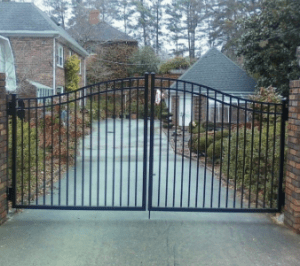
- Aluminum: Aluminum is often the best all-around option because it balances low maintenance, longevity, and appearance. It does not rust, it is lightweight, and it is commonly powder-coated for added protection. Quality powder coating helps resist fading and chipping. Aluminum can also replicate the look of wrought iron without the ongoing rust prevention and refinishing.
- Vinyl (PVC): Vinyl is a durable, low-maintenance choice that does not need painting and is not vulnerable to rot, insects, or moisture. It works especially well for privacy gates and can be a cost-effective option. Over time, lower-quality vinyl can become brittle or fade in direct sunlight, so material quality matters.
- Composite (wood-plastic): Composite gates offer the look of wood with far less maintenance. They typically do not require staining or sealing, and they resist rot and insects. Quality varies by manufacturer, so warranties and product thickness are important considerations.
- Galvanized steel or stainless steel: Steel can be extremely strong and long-lasting. For low maintenance, it should be stainless or properly protected with galvanizing or powder coating to prevent rust. Steel gates are heavier than aluminum, which often means you will need stronger posts, upgraded hinges, and sturdier hardware.
- Wood (cedar, redwood, or pressure-treated): Wood gates are attractive and can be customized easily, but they require the most ongoing maintenance. To reduce the risk of rot, warping, and insect damage, wood typically needs to be stained or sealed every few years.
- Wrought iron: Wrought iron has a classic look and strong security value, but it is not considered low-maintenance unless it is properly coated and maintained. Without regular sanding, touch-ups, and repainting, iron can rust and deteriorate over time.
What is the best lightweight gate material?
Aluminum is the best choice if your top priority is a lightweight gate that still delivers strength and low maintenance. It weighs far less than steel or wrought iron, which reduces strain on posts, hinges, and automated gate openers. A lighter gate is also easier to handle during installation, typically requires less force to open and close, and can reduce long-term wear on hardware and motorized systems.
What is the strongest gate material?
If maximum strength and security are the top priority, steel is typically the strongest gate material. Heavy-duty steel gates, especially galvanized steel or stainless steel, offer excellent resistance to impact and forced entry. Wrought iron is also very strong and widely used for security gates, but it requires more ongoing rust prevention and refinishing unless it is properly coated.
For many homeowners, the best real-world choice is the material that balances strength and low maintenance. In that case, galvanized steel is a top option for durability, while powder-coated aluminum is also a strong performer with significantly less weight and minimal upkeep.
Low-Maintenance Gate Ideas For Your Home
Here are some practical ideas to help keep your gate looking great and working smoothly with minimal upkeep:
- Use rust-resistant metals: Powder-coated aluminum and galvanized or stainless steel resist corrosion and typically require very little maintenance year after year.
- Get a wood-like appearance without the hassle: Composite panels and vinyl gates can deliver a wood-style look without the need to stain or seal, and they resist rot and moisture. These materials are also a strong option for privacy gates.
- Use fewer moving parts and stronger hardware: Choose high-quality stainless steel or powder-coated hinges, latch mechanisms, and gate posts to reduce wear and keep the gate operating smoothly.
- Choose designs that dry and drain: Solid panels can provide privacy but may dry slowly after rain. Slatted or perforated designs allow airflow and drainage while still providing privacy and visual separation.
- Use proper posts and foundations: A gate is only as strong as its posts. Posts that are properly braced and set in concrete are less likely to sag, shift, or require frequent adjustments.
- Install an automatic opener sized to the gate weight: Pairing a lightweight aluminum gate with a properly rated opener reduces strain on the motor and can decrease service calls over time.
- Select weather-resistant finishes: Choose powder coats, UV-resistant vinyl, or weather-rated finishes designed for sun and humidity. This is especially important in Atlanta, where humidity can accelerate wear on lower-quality materials.
- Use sealed or self-lubricating hinges: Hinges with sealed bearings or nylon bushings reduce friction and minimize the need for frequent oiling.
- Avoid exposed wood in wet climates: If you want the look of wood in the Atlanta area, composite materials or thermally modified wood are often better options because they resist moisture and insect damage.
- Stay ahead with simple seasonal upkeep: A quick seasonal check for loose hardware, a rinse with a hose, and occasional hinge lubrication can prevent small issues from becoming expensive repairs and can significantly extend the life of your gate.
Material pros and cons
Aluminum:
Pros: Lightweight, rust-resistant, low maintenance, and can resemble wrought iron.
Cons: Not as strong as steel for maximum-security gates.
Vinyl:
Pros: Low maintenance
Cons: Can be less rigid, offers a more limited color range, and may degrade over decades in extreme heat and direct sunlight.
Composite:
Pros: Provides a wood-like appearance with strong resistance to rot and insects.
Cons: Typically costs more than vinyl, and quality can vary by manufacturer.
Steel:
Pros: Very strong and difficult to cut or bend, making it a solid choice for security.
Cons: Heavier than aluminum, and it must be properly galvanized or powder-coated to prevent rust over time.
Wrought Iron:
Pros: Classic appearance, strong security value, and highly decorative.
Cons: Requires ongoing maintenance to prevent rust unless it is well coated and regularly maintained.
Atlanta Homeowner Local Considerations
Atlanta has a humid subtropical climate, which means long stretches of heat and humidity along with occasional severe storms. Over time, these conditions can increase the risk of rust, wood rot, and premature finish failure. In this environment, low-maintenance gate materials that perform well include powder-coated aluminum, galvanized steel, high-quality composite, and high-quality vinyl. It also helps to use stainless steel or galvanized hardware to resist corrosion. For long-term stability, make sure gate posts have proper concrete footings that can handle shifting soil and heavy gate loads.
Why Work With Professionals?
Material selection matters, but installation quality is just as important. A lightweight aluminum gate may still sag if the posts are undersized or not set correctly. A heavy steel gate requires stronger foundations, reinforced posts, and properly rated hinges and hardware. Atlanta gate installation experts can recommend the best material and finish for your property, confirm correct post spacing and footing depth, size automatic openers to match the gate weight, and install long-lasting hardware designed to minimize maintenance.
Conclusion
If you want professional guidance, high-quality installation, and long-term results, work with a local team that understands the Atlanta climate. Atlanta gate installation experts at FenceWorks of Georgia can evaluate your property, recommend the right materials and finishes, and install a low-maintenance gate system built to last. Visit the website, receive a free quote, or make an appointment to meet with the experts to help you select the best material for your gates and to provide a low-maintenance gate system you will enjoy over the years.