
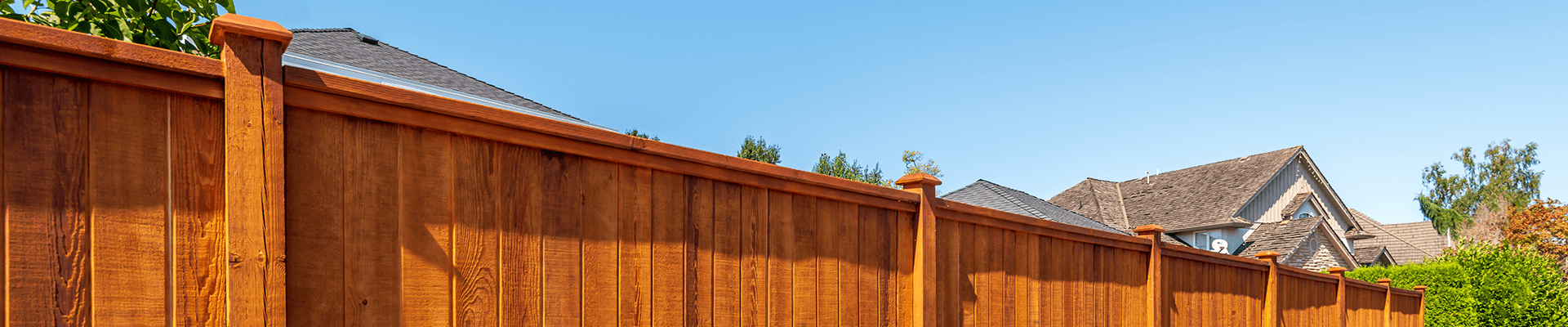
Ask a Fence Contractor: Which Way Should Your Fence Face?
Many fences have a “good” side and a “bad” side. The so-called bad side features the structural elements of the fence, including any exposed posts and rails, while the so-called good side will be nicely finished.
But ultimately, it depends on the design of the fence as well as the materials used to construct it.
How Materials Affect The Way Your Fence Should Face
Generally, wood and vinyl fences that are made with solid board, stockades, pickets, or panels, rely on upright posts and vertical rails to support these elements. Sometimes there are just vertical posts with spaced slats (or board) attached to the posts. Either way, this means that there will be a difference between one side and the other. However, when there are just posts and rail (as in the traditional post-and-rail fence), the rails can be attached through the posts so there is no difference at all.
If chain link fencing is attached to a wooden frame, there will also be a difference between the two sides. But if it is installed in a more conventional manner, using a combination of vertical and horizontal metal poles to form a framework, then there will be no difference, and so your fence can face either way.
If There is a Good and a Bad Side, Which Way Should Your Fence Face?

So, if your fence isn’t the same on both sides, which way should your fence face?
If your fence isn’t the same on both sides, you might wonder which side should face out. In Georgia, there are legal requirements for fencing, including height restrictions and ensuring no obstructions on corner lots. Additionally, some cities and homeowners’ associations (HOAs) have specific rules about fence materials, decorative posts, and, in many cases, which side of the fence should face out.
When it comes to fence etiquette, many believe that the “good” side should face your neighbor, allowing them to enjoy the more attractive view. On the other hand, if you’re the one paying for the fence, it’s understandable that you might want to see the nicer side yourself. However, beyond aesthetics, it’s crucial to consider other aspects like security. If structural elements like struts and horizontal supports are on the outside, they could potentially be used as a makeshift ladder for intruders. For this reason, it might make sense to prioritize safety by keeping the structural side inside your property while offering your neighbor the benefit of the more visually appealing side.
For fences facing the street, most people agree that having the “good” side facing outward enhances curb appeal, potentially increasing your property value.
Choose the Best Fence for Your Property
If you’re in Georgia and considering a new fence, contact the experts at FenceWorks of Georgia. We can help you decide the best placement and orientation for your fence. Call us today!