

How to Install a Chain Link Dog Kennel
A chain link dog kennel is a safe, durable, and affordable option for giving your dog a safe space to eat, rest, and relax. If you’re wondering “How to install a chain link fence for dogs?” or “How to set up a dog kennel?”, this step-by-step guide will give you the plan, the tools, and the installation steps to ensure your pet is safe. If you’re in the Atlanta area looking for chain link fence installation or dog kennel installation in Atlanta, there are a few local factors to keep in mind, such as soil conditions, weather, and permit requirements. Proper preparation and adherence to local codes will ensure your kennel lasts for years and keeps your pet secure.
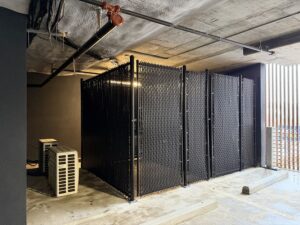
Planning and preparation
- Look into local regulations: Before you begin, check Atlanta building codes, HOA rules, and any permit requirements. Some areas restrict fence height, materials, or the distance between fences and property lines, so verify these details upfront.
- Measure and mark: Determine the size of your dog kennel based on your dog’s needs and available yard space. Use stakes and string to outline a straight, rectangular layout. Mark the corners clearly along with the planned location of the gate.
- Select materials: Choose heavy-duty chain link material between 9-gauge and 6-gauge for durability. For most small to medium dogs, kennels that are 4 to 6 feet tall work well. For larger or high-jumping dogs, opt for 6 to 8 feet. Because Atlanta’s climate is humid, galvanized or vinyl-coated chain link is recommended to prevent rust and increase longevity.
- Choose footing: Decide whether your kennel will use a trench-and-buried bottom, a concrete footing, or tension wire. Your dog’s behavior should guide this choice—diggers may require buried wire or a concrete edge to prevent escape.
Tools and materials
- Equipment: post hole digger or auger, shovel, level, tape measure, wheelbarrow, mixing hoe, heavy-duty pliers, fence puller, wrench, hammer, saw for wood rails or posts, and a string line.
- Parts: chain link fabric; line posts in standard or heavy-duty options; terminal or end posts designed to secure the gate area and provide structural support; top rails available in various shapes and sizes; tension bands and tension bars used to secure the chain link fabric to posts; brace bands used to connect top rails and fittings; and dome caps designed to finish and secure the tops of posts.
Step 1 — Set posts and layout
- Marking posts: Mark the post locations at regular intervals along your string line, typically 10 feet between line posts.
- Post holes: Dig the post holes ~2’ deep below grade. Since Atlanta soil is dense clay, deeper holes and a gravel base help improve drainage.
- Add posts and gravel: Place 2 to 6 inches of drainage gravel at the bottom of each hole (optional). Set the posts in position and pour concrete around them. Ensure the posts remain plumb, and allow the concrete to dry before continuing.
Step 2- Top rail and braces
- Install the top rail, middle rail, and brace rails.
- Rail ends and tension bands are required to secure the rail to the posts.
- Confirm rails are level.
Once the frame is in place, hang the chain link fabric.
- Unroll the mesh along the posts and stretch it roughly into place.
- Connect one end to a terminal post with tension bars and bands. Slide the tension bar into the chain link mesh and connect it vertically with bands.
- Stretch the fabric tight back to the next terminal post with the help of a fence puller. The correct tension will ensure it does not sag.
- Add tension wire, hog rings, and fence ties to secure the mesh.
Step 4 — Install gate(s)
- Install the gate by using heavy-duty hinges and adjust the gate so it easily opens and closes.
- Ensure the opening at the bottom of the gate is small enough to keep your furry friend secure (typically 2” above the ground).
- Install a latch that the dogs cannot open; a two-latch system or padlocks will offer an additional measure of security.
Methods for adding additional security to the base of your kennel.
It is crucial to lock the bottom of the kennel to prevent escapes and to keep small animals from entering. Several options are available depending on your dog’s behavior and the level of security you need.
Bury the bottom of the fence: Dig a shallow trench 6 to 12 inches deep and bury 6 to 12 inches of chain link fabric. Refill and tamp the soil firmly to discourage digging.
Bottom tension wire: Install a heavy-gauge tension wire along the bottom of the fence and attach the chain link fabric to it using hog rings.
Footer or footing: Pour a thin strip of concrete, 4 to 6 inches wide and 4 to 6 inches deep, along the fence line and set the mesh into it so that the bottom is permanently fixed in place.
L-shaped apron: Unroll 12 to 24 inches of chain link fabric outward from the kennel and lay it flat in an L-shaped configuration. Bury this apron to deter digging.
Ground anchors or landscape timbers: For a quicker solution, attach the mesh to treated timbers or metal stakes and drive them into the ground for added stability.
Install rocks or pavers: Place heavy stones or pavers along the inside bottom of the kennel to prevent lifting or digging.
Can I install a chain link fence myself?
Yes, you can install a chain link fence on your own if you’re comfortable using tools, handling heavy materials, and taking accurate measurements. With two people, a small kennel can often be completed as a weekend DIY project. However, hiring professionals may be the better option if:
- The project requires precise grading or leveling.
- The area has rocky or compacted soil that makes digging difficult.
- The layout includes multiple corners, gates, or uneven terrain.
- You are installing a large kennel or full perimeter fence that requires exact alignment.
- You want long-term durability, stronger structural support, or warranties on materials and labor.
- You do not have time, tools, or experience, and would prefer to call a well-known contractor who provides Atlanta Chain Link Fence Installation or Dog Kennels Installation in Atlanta.
Cost and timeline
The cost of DIY depends on the size and materials that are used- you will need to pay a lot of money to buy posts, concrete, fabric, gate kits, and tools. Even a small kennel would require a weekend with a 2-person team.
When to call a pro
Get professional assistance when required with permits, tricky terrain, or request a turnkey solution. Go to search engines and type in Atlanta Chain Link Fence Installation or Dog Kennels Installation in Atlanta, and review and check reviews, licenses, and warranties.
Conclusion
A chain link dog kennel is a manageable project for many homeowners, and calling in professionals is always an option if the installation becomes complex. By following the planning steps carefully, such as measuring accurately, setting sturdy posts in concrete, installing the chain link fabric, securing a reliable gate, and properly anchoring the bottom to prevent digging, you can create a durable and secure space for your dog. Whether you choose to complete the work yourself or hire experts for Atlanta chain link fence installation or dog kennel installation, the goal remains the same: a safe, long-lasting, and comfortable enclosure for your pet.