
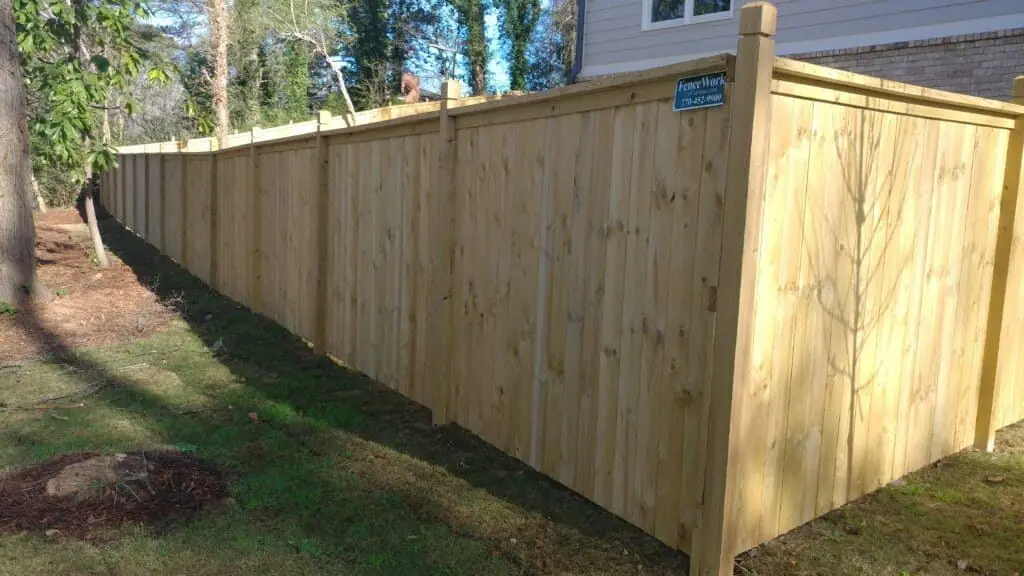
Georgia fence laws: permits, property lines & HOA rules
What to check before you build a fence in Georgia — permits, height limits, property lines and setbacks, and HOA approval. Rules vary by city and county and change often, so always confirm yours locally.








General information, not legal advice. Fence rules vary by city, county, and HOA and change often. Confirming the rules for your property — and getting any required permit and HOA approval — is the homeowner’s responsibility. FenceWorks builds to your specifications; we don’t research or verify local rules on your behalf. Always confirm current requirements with your local permitting office before you build.
Do you need a fence permit in Georgia?
In much of Georgia, building a fence requires a permit from your city or county — but not everywhere, and the requirements differ by height, location, and whether a pool is involved. Some jurisdictions require a permit for any fence; others only above a certain height or in certain districts; a few don’t require one at all.
The only way to know is to ask your local building, permitting, or community-development office before you build. If a permit is required, getting it is part of the homeowner’s responsibilities — we build to your approved plans, but we don’t research the rules or pull permits for you.
More on how permits work, county by county: Do I need a permit to build a fence in Georgia?
Fence height limits
Height limits vary by jurisdiction and by where the fence sits on your lot. As a general pattern in many Georgia communities, front-yard fences are held to a lower height — often around 3 to 4 feet, and sometimes required to be partly open — while back and side-yard fences are commonly allowed up to about 6 feet. Taller fences usually need a variance.
Two details people miss: the limit generally applies to the whole structure, so a lattice topper or a trellis extension for climbing plants usually counts toward the maximum height — check before adding height to an existing fence. And commercial property plays by different rules: commercial and industrial zoning districts commonly allow fences in the 8-to-10-foot range, with stricter limits along any line a business shares with homes.
Corner lots often have extra “sight-triangle” rules that keep fences low near intersections and driveways for visibility. These are typical ranges only — your city, county, and zoning district set the actual limits, so confirm yours before you build.
Property lines, setbacks & which side faces out
Property lines cause more fence questions — and more neighbor disputes — than anything else. A few general principles:
- Build on your own land. Fences usually go just inside your property line, not on it, unless you and your neighbor agree to share one. Don’t assume the old fence, the curb, or the tree line marks your boundary.
- Know where your line actually is. Check your plat or property survey, or hire a surveyor — guessing is how fences end up in the wrong place and have to be moved.
- Watch for easements. You generally can’t block a utility or drainage easement, even on your own property. And call 811 to locate underground utilities before you dig.
- Stay out of the public right-of-way. A fence can’t encroach on roads, sidewalks, or the right-of-way along your street. Georgia has no statewide rule for how close a fence can be to a road — it’s set locally, and some jurisdictions require fences near corners and intersections to sit well back for visibility.
- Talk to your neighbors first. A quick conversation about your plans — and, for a fence on a shared line, a simple written agreement — prevents most neighbor disputes before they start. It’s basic fence etiquette, and it costs nothing.
- The finished side faces out. By convention — and sometimes by local code or HOA rule — the smooth, “good” side of the fence faces the street and your neighbors, with the posts and rails on your side.
Exact setbacks from the line, the road, and easements vary by jurisdiction, so confirm the specifics with your local office.
HOA fence rules
If your neighborhood has a homeowners association, its rules are separate from — and often stricter than — your city or county’s. Many HOAs limit fence materials, colors, heights, and styles, and require written approval (an architectural-review submission) before you build.
HOA approval does not replace a city permit, and a city permit does not satisfy your HOA — you may need both. We don’t have access to HOA covenants, so checking your community’s CC&Rs and getting approval is up to you. It’s worth doing first: a fence your HOA later rejects can mean tearing it out at your own expense.
Pool fence rules in Georgia
Pool barriers are the one place fence rules get strict nearly everywhere — they’re safety codes, not zoning preferences. If your fence encloses a swimming pool, expect a permit to be required and the design itself to be regulated: a minimum barrier height of at least 4 feet is the widely enforced standard, gates must be self-closing and self-latching, and the fence has to resist climbing — with limits on picket spacing, gaps under the fence, and anything a child could use as a foothold.
Local enforcement varies: some metro-Atlanta jurisdictions add their own requirements on top of the baseline pool-barrier codes, and an inspection after installation is common. Confirm your pool-barrier rules with your local office before you build — then see our pool fence page for styles that are built to meet code.
Before you build: a quick checklist
Five steps that keep a fence project legal, neighborly, and hassle-free.
Call your local office
Ask your city or county building/permitting office what’s required.
Read the code & your HOA
Check the municipal code and your HOA covenants (CC&Rs).
Find your property line
Use your plat or survey — don’t guess from the old fence.
Get approval first
Secure any permit and HOA sign-off before you build.
Then design your fence
Bring us your approved plans and we’ll build it to spec.
Rules squared away? Let’s build.
We build the fence you want, to your approved plans — get a free, itemized estimate.
What Atlanta neighbors say
4.9 · 950+ verified Google reviews across metro Atlanta — including right here in Atlanta
★★★★★
I obtained several quotes to install a fence before being referred to FenceWorks of Georgia. Johnathan arrived as scheduled to review the yard and provided an estimate within a few days. The installation crew arrived on time, installed the fence with no issues, and hauled off the old fence. FenceWorks did an excellent job installing a new fence at the best price.
— Kim W., Atlanta
★★★★★
We are obsessed with our new fences, both the back privacy fence and the front railed fence. Could not recommend more! From the beginning talking with Brian, all the way through working with Victor to the end, everything in the entire process was smooth. When I didn’t understand parts Victor showed me photos and videos of other job sites so I knew exactly what was being asked and the outcomes. It was so great. Everyone who came to the house was friendly, hard working and tidy! Wish they did decks 🫶
— Morgan M., Atlanta
★★★★★
Great experience all around. After getting some other estimates, not only was FenceWorks very competitive, but the follow up from their sales rep Johnathan Langley was what made the difference, rather than the indifference I was getting from the competition. Showed up when expected, worked hard and smart, and delivered a high quality product and outcome. They were very good to stop and communicate through the process, easy to work with, and cleaned up well. Highly recommended!
— Joe E., Atlanta
★★★★★
Amazing quality and impeccable customer service for a custom metal fencing and gate project. Meyo was so great to work with, he showed up early, had a crew of folks that got the job done quickly and the quality is above and beyond what I expected. Thanks Meyo for your help today and for being great to work with. If anyone is looking for fencing and gate work this is your guy!
— Jeremy S., Atlanta
★★★★★
Jonathan came promptly and gave us a very thorough proposal with three levels of choice. The crew came on the appointed day and did a great job, cleaned the area nicely including lots of attention to detail and finished in one day!
— Helen D.
★★★★★
Pancho and his crew did an amazing job with our fence replacement. They worked very hard throughout the day and their quality of work was great.
— Beau W.
Every quote above is a real, unedited Google review from a FenceWorks of Georgia customer, including homeowners right here in Atlanta.
Georgia fence law FAQ
Straight answers on permits, heights, property lines, and HOAs.
Do I need a permit to build a fence in Georgia?
Often, yes – but it depends on your city or county, the fence height, and the location. Some jurisdictions require a permit for any fence, others only above a certain height, and a few not at all. Check with your local permitting office; getting the permit is the homeowner’s responsibility.
How tall can a fence be in Georgia?
It varies by jurisdiction and by where the fence sits. A common pattern is about 3-4 ft in the front yard (sometimes required to be partly open) and up to about 6 ft in the back and side yards, with taller fences needing a variance. Confirm the exact limits for your address locally.
How far from the property line does a fence have to be?
Fences are usually built just inside your own property line rather than on it, and must stay clear of utility and drainage easements. The exact setback varies by jurisdiction – locate your line with a plat or survey and confirm the distance with your local office.
Which side of the fence should face my neighbor?
By convention, the finished or smooth side faces the street and your neighbors, with the posts and rails on your side. Some local codes and HOAs actually require the finished side to face out, so it’s worth checking. Keeping the rails on your side has a security upside too – exposed rails on the outside make a ready-made ladder for climbing over.
Can I build a fence right on the property line?
Sometimes, if you and your neighbor agree to a shared fence – but many homeowners build just inside their own line to avoid disputes. Rules vary, so talk with your neighbor and confirm what your jurisdiction allows.
Does my HOA override city rules?
You have to satisfy both. HOA rules are separate from – and often stricter than – city or county rules, and HOA approval doesn’t replace a permit (or vice versa). Get your HOA’s written approval before you build.
How close to a road can a fence be in Georgia?
There’s no statewide rule – it’s set locally. In general, a fence must sit on your own property, outside the public right-of-way, and can’t block sight lines at intersections or driveways. Some jurisdictions require fences near corners or roads to be set back further for visibility, so check your city or county’s setback rules before you build.
What are the pool fence requirements in Georgia?
Pool barriers are regulated almost everywhere: expect a required permit, a minimum height of at least 4 feet, self-closing and self-latching gates, and a climb-resistant design with limits on gaps and picket spacing. Local jurisdictions can add requirements beyond the baseline code, so confirm yours before building.
How tall can a fence be on commercial property?
Usually taller than residential. In commercial and industrial zoning districts across Georgia, maximum fence heights commonly run in the 8-to-10-foot range, though a property that borders residential lots often faces stricter limits along the shared line. Your property’s zoning designation sets the actual number – check with the local planning office.
Are electric fences legal in residential areas in Georgia?
It depends on local rules, and they tend to be restrictive: many jurisdictions don’t allow electric fences on smaller residential lots (restrictions are often tied to acreage), and where they are allowed, expect requirements like visible warning signs and limits on the fence’s power output. HOAs frequently prohibit them outright. Check your local ordinance and HOA before considering one.
What happens if I build a fence without a permit?
Nothing good: you can face fines, a stop-work order mid-project, or in serious cases an order to remove the fence entirely. Unpermitted work can also surface when you sell your home – inspections and closings can stall over it. If your jurisdiction requires a permit, getting it first is far cheaper than fixing it later.
Do you pull the permit or check the rules for me?
No. We build the fence you want, to your specifications. Confirming your local rules, getting HOA approval, and pulling any permit are the homeowner’s responsibility – but we’re glad to build to whatever your approved plans call for.