
By the FenceWorks of Georgia Installation Team | Metro Atlanta fence builders since 2006
You’ve decided it’s time for a new fence, but the old one is still standing. Some of it looks fine. So the question is fair: can the crew reuse part of it to save money? And if not, where does it all go?
At a Glance
- Reuse happens part by part. Crews evaluate each component and keep only what’s still structurally sound. In practice, that means very few wood parts and occasionally some metal ones.
- Old wood rarely goes back up. Hidden rot at the soil line, warping, split fastener holes, and color mismatch with new lumber rule out most posts and boards.
- Metal gets the best second life. Chain link fabric, metal gates, and aluminum panels are the items most often reused on the job or sent to a scrap yard for recycling.
- Ask before tear-out. Find out which parts will be reused or recycled, and whether removal and haul-off are included in the quote.
- Get warranty terms in writing. Reused parts may not carry the same coverage as new materials.
Do Fence Companies Actually Reuse Old Fences?
Sometimes, but not nearly as often as homeowners hope. On a full replacement, new materials are the norm, largely because a contractor can’t stand behind a new fence built from aged parts with unknown hidden damage. The decision is almost never “reuse the whole fence” versus “throw the whole fence away.” It happens component by component, and the material matters more than anything else.
It helps to separate two ideas. Reuse means a part from the old fence gets installed into the new one, like a metal gate or a run of intact panels. Leaving an existing fence standing while a new one goes up beside it is a different situation, and one that usually creates maintenance headaches down the road (more on that in the FAQ).
On replacement jobs across metro Atlanta, crews mostly see four materials: wood (by far the most common), chain link, ornamental aluminum or steel, and vinyl. Each has different reuse odds. Wood rarely survives well enough; chain link and aluminum hold up better; vinyl falls somewhere in between.
Even when rails or panels are sound, most professionals prefer new posts set in new concrete, because posts carry the whole structure and are where hidden damage concentrates. Whatever isn’t reused gets sorted: metal for recycling, wood and mixed debris for disposal at construction and demolition (C&D) facilities.
What Happens to an Old Fence on Removal Day
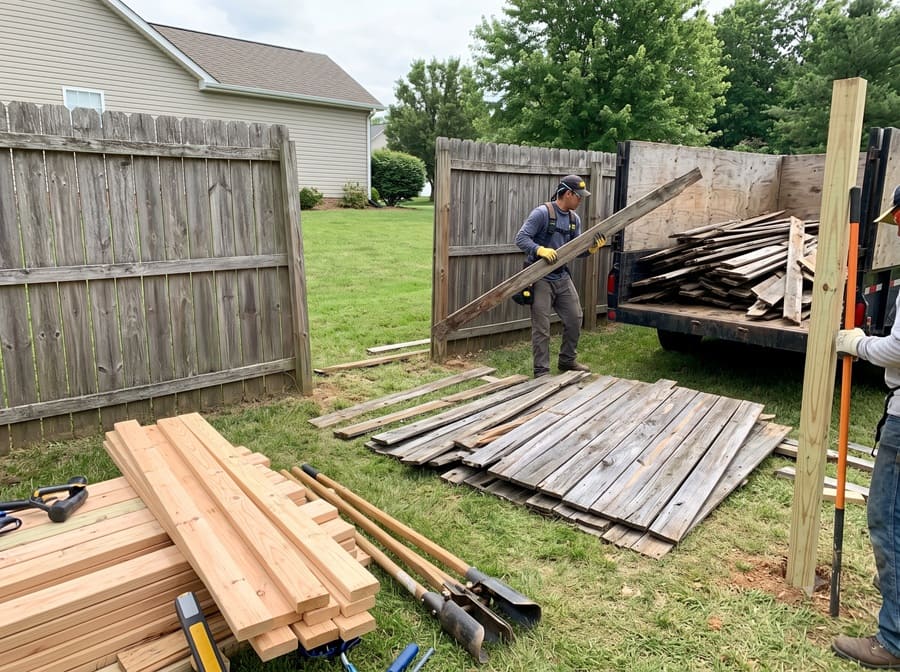
The crew arrives, walks the existing fence line, and confirms with the homeowner what to keep. If you want to save a gate or a few boards for a backyard project, say so before demolition begins. Once the team starts clearing, the pace picks up fast. A typical tear-out looks like this:
- Gates come off their hinges and hardware is removed.
- Pickets, boards, or chain link fabric are stripped from the rails.
- Rails are unbolted or cut.
- Posts are pulled, cut at grade, or broken free from their concrete footings.
- Concrete footings are dug out if the new post layout requires it.
Careful dismantling to save parts takes noticeably more labor than standard tear-out. Volume adds up quickly, too: a 6-foot privacy fence uses roughly 220 standard 5.5-inch pickets per 100 feet of run, before you count rails and posts. Metal parts from a chain link fence (posts, rails, tension bars) are stacked separately for reuse evaluation or recycling.
Removal and haul-off are commonly priced as a separate line item, so check in writing whether disposal of the old fencing is included before you sign. Our fence cost guide shows how removal fits into the overall price.
If the new layout means new post holes, utility locates come first. Under the Georgia Underground Facility Protection Act (O.C.G.A. § 25-9-1 et seq.), anyone doing mechanized digging, such as with a powered auger, must request locates through Georgia 811 beforehand. Homeowners digging by hand are strongly encouraged to request them too. The service is free.
Material by Material: What Can Be Reused, Recycled, or Has to Go
Not every material meets the same fate. Here’s how each type typically breaks down on a real job.
| Material | Reuse odds | What decides it | If not reused |
| Wood pickets and rails | Very Low | Splits at fasteners, cupping, rot, gray weathering | C&D debris disposal; never burned if treated |
| Wood posts | Low | Rot or insect damage at the soil line, hidden until pulled | Disposal |
| Chain link fabric | Moderate | Rust, stretched or sagging mesh, correct height | Scrap metal recycling |
| Chain link posts and rails | Low to moderate | Corrosion at grade, bends, cost of breaking off old concrete | Scrap metal recycling |
| Aluminum panels and posts | Good | Straight sections, intact powder coat, matching style | Aluminum recycling |
| Steel or wrought iron | Moderate | Rust-through, cracked welds, refinishing or paint cost | Steel recycling |
| Vinyl fence panels | Moderate | Same manufacturer system, cracks, UV brittleness | Limited local recycling; call ahead |
| Metal gates | Good | Square frame, no sag, latches that still work | Scrap metal recycling |
Wood. Atlanta’s humid climate is hard on wood: long wet-and-dry cycles, heavy rain, and red clay that holds moisture against posts all speed up rot, warping, and termite damage. Lifespan varies widely with wood type, treatment, and upkeep, but by the time a homeowner calls about replacement, the posts are usually rotted at the soil line (we explain why in why fence posts rot at ground level) and the boards are split around old nail and screw holes. Hidden pest damage can also lurk in boards that looked fine before removal. Mixing old boards with new lumber creates a patchy look most homeowners notice and regret.
Chain link. Fabric that isn’t rusted or permanently stretched can sometimes be re-tensioned on new framework. Galvanized posts and rails tend to corrode at grade, though, and breaking off old concrete often takes more labor than setting new posts, so complete replacement with new mesh is the more common approach. A chain link installation crew can tell you on site whether your fabric is worth keeping. Bare galvanized chain link is all steel, which is widely recycled; vinyl-coated mesh can be harder to place, so ask your scrap yard.
Aluminum and steel. Straight, undamaged aluminum panels with an intact finish are good candidates for reuse when a homeowner extends or reroutes a run. If you’re adding an aluminum fence section, ask whether existing panels from the same style line can be folded in. Steel and wrought iron are reusable when rust is only on the surface; rust-through or cracked welds usually send them to the recycler. Gates that are still square, latch properly, and show no weld cracks are frequently saved.
Vinyl. Vinyl panels slide into routed posts, so they come apart cleanly. The catch is compatibility: profiles vary by manufacturer, and older vinyl can turn brittle after years of Georgia sun. Recycling outlets for used vinyl fencing are limited in many areas, so call ahead before hauling it anywhere.
Hardware. Old hinges, latches, and fasteners are usually replaced. They’re inexpensive, they wear out, and swapping them keeps the new fence working as a complete system.
Old Wood Fence Safety: Why Most Installers Won’t Hand Boards Back for Projects
Homeowners often ask to keep old fence boards for a garden bed, a fire pit, or DIY furniture. The idea sounds good, but there are real safety concerns.
Fences built before about 2004 may have been pressure-treated with chromated copper arsenate (CCA). The U.S. EPA announced in 2002 that CCA would be phased out of residential uses, specifically including residential fencing, under an agreement with manufacturers, and advised against composting or mulching CCA sawdust and scraps. Newer copper-based preservatives don’t contain arsenic, but the National Pesticide Information Center says treated wood of any kind should never be burned and that chipping or composting it may release chemicals into the environment. North Carolina’s public health department also recommends against using CCA-treated wood for garden beds or compost bins.
So don’t burn old fence boards in a backyard fire pit, and don’t use them for raised vegetable beds where chemicals could leach into soil and food. Most fence companies won’t hand back treated boards as firewood for exactly that reason. The point isn’t that every board is toxic; it’s that the risk is real and the cost of getting it wrong is high.
Weathered wood still has plenty of character for decorative, non-food projects like accent walls, garage shelving, or garden edging away from edible plants. If you keep a few sound boards, cut them outdoors, wear gloves and a dust mask, and wash up afterward.
When Reusing Old Fence Parts Actually Makes Sense
Selective reuse works in a narrow set of conditions: a relatively young fence, high-quality metal components in good shape, or a modest layout change that keeps existing runs intact.
A Tucker Gate That Outlived the Fence Around It
A Tucker homeowner was replacing an aging wood privacy fence that had rotted at most of its posts. A few years earlier, a black aluminum walk gate had been added near the patio. During the walkthrough, the estimator found the wood posts soft below grade and many pickets split at their fasteners, but the gate was straight, latched cleanly, and showed no corrosion at the welds. The crew retired all of the wood, set a new post sized for the gate, and rehung it on the new run. The homeowner kept the one component with years of life left and didn’t pay for a gate she didn’t need.
Other situations where reuse tends to pay off
- Extending an aluminum run with matching panels. Panels from the same style line can bolt on beside new ones with little visible difference. Our guide to extending an existing fence covers how to blend old and new runs.
- Relocating a short chain link run. A kennel or pet enclosure can sometimes move to a new part of the yard using its intact fabric, with new posts where the old ones have corroded.
Reusing components can lower material costs on partial repairs, and salvaging unaffected sections often makes sense after localized damage. But careful removal and refitting add labor, and that labor can cost more than new materials. Ask your installer whether reuse actually reduces the price before assuming it will.
Reuse also keeps material out of landfills and reduces demand for newly manufactured components. The trade-off is coverage: reused parts may not be covered the same way new materials are, so get the warranty terms on reused parts in writing. FenceWorks of Georgia spells out its terms in its written fence warranty; whichever contractor you hire, ask the question before work starts.
Disposal, Recycling, and DIY Options for Old Fencing
Not all old fencing ends up in a landfill. Metal is widely recycled, wood typically goes to C&D facilities, and a few boards may stay with the homeowner for a project.
Old chain link and aluminum fencing is often taken to local scrap yards. Steel is North America’s most recycled material, and the Aluminum Association notes that recycled aluminum takes about 5% of the energy needed to produce new metal. Homeowners with a truck can sometimes haul metal to a scrap yard themselves for a small payout; the rest goes with the contractor’s load.
Old wood typically goes to construction and demolition landfills. The scale of that waste stream is large: according to the EPA, the U.S. generated about 600 million tons of C&D debris in 2018, with just under 145 million tons sent to landfills and the rest directed to some form of next use. Local rules can differ for treated versus untreated lumber, so check with the facility before hauling.
If you’re planning DIY removal, confirm the property line before changing the fence layout, request Georgia 811 locates before digging any new post holes, and budget time for multiple dump or scrap-yard trips.
Some reuse centers accept donated building materials in good condition. Atlanta Habitat for Humanity’s ReStores are one example: a sound metal gate or unused fence panels may qualify, while weathered boards with fastener holes rarely do. Call ahead and send photos if possible. The EPA’s best-practices guidance notes that wood salvaged during deconstruction can be used in other projects, which is exactly the goal.
FAQ
Can my old fence stay in place if I install a new fence on the property line?
An old fence can sometimes remain temporarily while a new one is built, but long-term double fencing creates maintenance problems and can trigger property line disputes. Check local ordinances, HOA rules, and your survey to confirm exactly where the line is; our overview of Georgia fence laws is a good starting point. Most installers prefer to remove the old fence along the planned run for access, a straight layout, and easier long-term maintenance. If you want to protect a specific section, mention it during the walkthrough so the crew can plan around it.
Is it cheaper to repair an old fence than to replace it?
Repair usually makes sense when damage is limited, and the rest of the fence is structurally sound. A common rule of thumb is that if more than roughly a quarter of the boards or posts need work, replacement starts to make more financial sense. If most posts on an older wood fence are loose or rotted, ongoing repairs can quickly exceed the cost of a properly built new fence. Our guide on when to replace a fence walks through the signs. The cleanest comparison is to ask one contractor for two quotes, one for repair and one for full replacement, and weigh them over the next decade rather than the next year.
Can old chain link fence materials be donated or sold?
Fully intact chain link panels, like kennel panels, may be sellable locally, but loose fabric and rusty posts usually go to scrap recycling. Before scheduling disposal, check whether local reuse stores, shelters, or community gardens need a short run of chain link or a spare gate. Remove sharp ties and broken wire ends before donating, and transport heavy rolls safely. If donation doesn’t work out, a scrap yard will generally take bare steel fencing.
Will a fence company lower my price if I remove the old fence myself?
Some contractors will discount the job if the old fencing is already removed and disposed of before the install crew arrives. DIY tear-out means you handle pulling posts, lifting heavy concrete, and following local disposal rules yourself. Confirm in writing how much is actually saved, because if the site isn’t fully cleared when the crew shows up, delays can erase the savings.
What should I ask a fence company about my old fence before I sign a contract?
Get answers to these in the written proposal:
- Which parts of the old fence, if any, will be reused?
- How will old panels, posts, and damaged sections be handled?
- Is metal recycled, or does everything go to a landfill?
- Is haul-off included, and what’s the charge if not?
- Are there extra fees for concrete footing removal or difficult access?
- How does the warranty treat reused components versus new materials?
Having these details in writing before the build starts means no surprises, no piles of old fencing left behind, and a clear picture of what your money covers.
Authorities & Sources
- Georgia Underground Facility Protection Act, O.C.G.A. § 25-9-1 et seq. (Georgia 811)
- Georgia 811: Call Before You Dig
- S. EPA: Use of Treated Wood Containing Arsenic (2002 news release)
- National Pesticide Information Center: Regulation and Disposal of Treated Wood
- NC Department of Health and Human Services: CCA-Treated Wood
- S. EPA: Sustainable Management of Construction and Demolition Materials
- S. EPA: Best Practices for Reducing, Reusing, and Recycling C&D Materials
- The Aluminum Association: Recycling
- Steel Market Development Institute (AISI): Steel Recycling
- Atlanta Habitat for Humanity: ReStore Donations
About the Author
The FenceWorks of Georgia Installation Team has built, repaired, and replaced residential and commercial fences across metro Atlanta since 2006, from Smyrna to Dacula. The family-owned company’s estimators and crews work daily with wood, chain link, aluminum, steel, vinyl, and Trex composite, and they make the same call on every replacement: what’s worth saving and what needs to go. Their articles draw on that field experience to help homeowners plan fence projects with fewer surprises.