
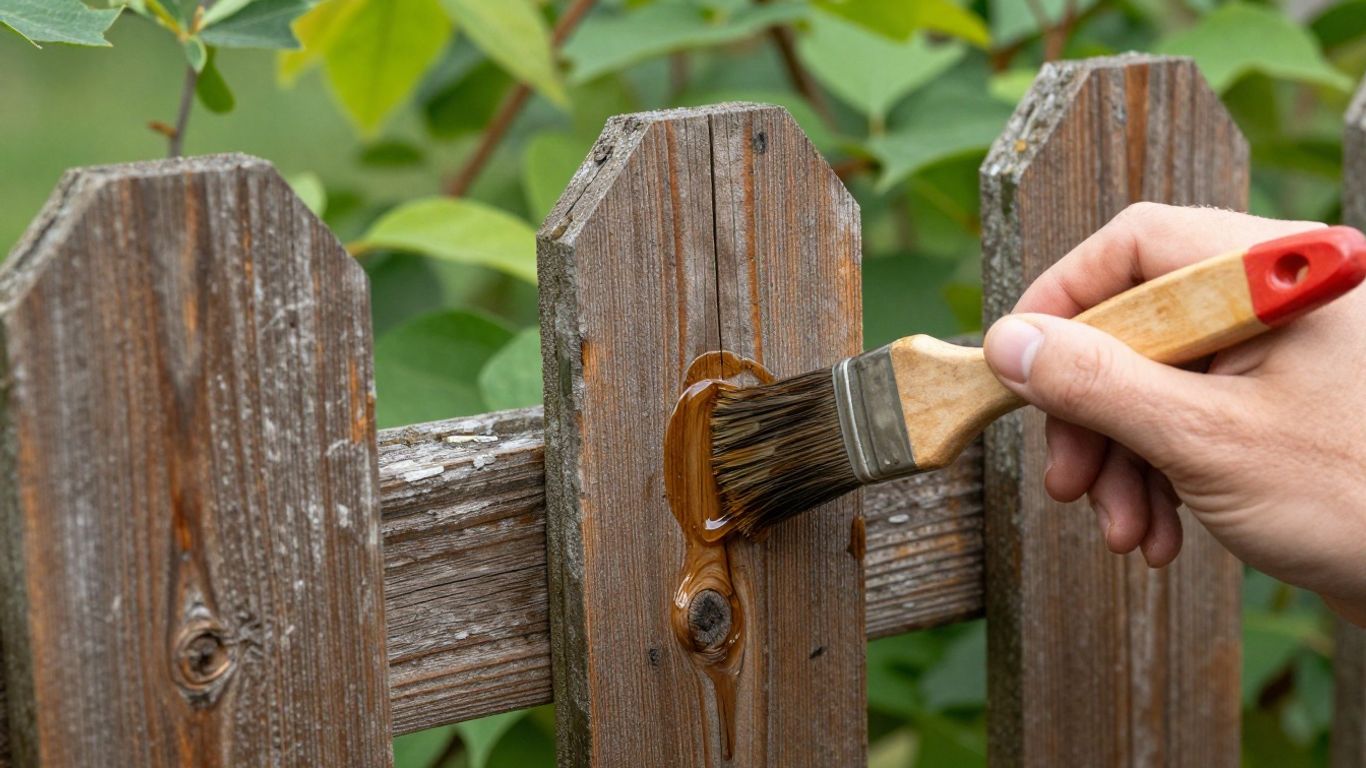
A wood fence looks great around a home, but it needs some protection if you want it to stay that way.
For most wood fences, the best choice is a high-quality exterior wood stain or water-repellent sealer. These products help keep moisture from soaking into the wood and can reduce damage from the sun. Paint is another option if you want a solid color, although painted fences usually require more maintenance once the finish starts to peel or chip.
The USDA Forest Products Laboratory’s guidance on exterior wood finishes specifically notes that semitransparent penetrating stains work well on fences because they soak into the wood rather than forming a surface film that can crack or peel.
Here in Georgia, protecting a wood fence is especially important. Between summer sun, humidity, rain, and fast-growing vegetation, an untreated or poorly maintained fence can take a beating.
The good news is that taking care of a wood fence doesn’t have to be complicated. A good finish, proper drainage, and a little routine maintenance can go a long way.
What’s the Best Thing to Put on a Wood Fence?
There are three main options homeowners use to protect wood fencing:
- Wood stain penetrates the wood and adds color while helping protect against moisture and UV exposure.
- Wood sealer helps repel water and may be clear or lightly tinted.
- Exterior paint creates an opaque surface coating and gives you the widest range of color choices.
For many homeowners, a penetrating exterior stain is the best balance of appearance and protection.
It lets some of the natural character of the wood show through while helping protect the boards from sun and moisture. USDA wood-finishing guidance also favors penetrating stains for fences because they weather gradually instead of failing by cracking and peeling like some film-forming finishes can.
The right product still depends on the fence, the type of wood, how much sun the property gets, and the look you want.
Wood Stain: A Good All-Around Choice
Stain is one of the most common ways to protect a wood fence.
Unlike paint, which sits primarily on the surface, a penetrating stain soaks into the wood. That makes it a good option for fences because you don’t have to deal with the same type of peeling you may eventually see with paint.
Exterior fence stains are available in several levels of opacity.
A transparent or semi-transparent stain lets more of the wood grain show through. A solid stain provides more color coverage while still being designed for exterior wood.
If your fence gets a lot of direct sunlight, look for an exterior stain designed to provide UV protection as well as moisture resistance.
In Georgia, both matter. A fence may spend part of the year dealing with intense sun and another part dealing with repeated rain and high humidity.
Wood Sealer: Simple Moisture Protection
A wood sealer is another option, especially when you want to keep the fence looking close to its natural color.
The main job of a water-repellent finish is to slow the rate at which liquid water enters the wood. Reducing moisture movement can also help reduce some of the swelling and shrinking that stresses exterior wood and its finish. The USDA Forest Products Laboratory explains how water-repellent treatments work on exterior wood.
Some sealers also contain UV protection. That’s worth looking for if the fence receives direct sunlight for much of the day.
Keep in mind that clear finishes generally don’t hide weathering or discoloration. If your fence has already turned gray or developed staining, it may need to be cleaned before you apply a new finish.
What About Painting a Wood Fence?
You can absolutely paint a wood fence.
Exterior paint gives you a solid, uniform color and creates a protective film over the wood. It’s a good option when appearance is the priority or when you want the fence to match your home.
The tradeoff is maintenance.
Wood naturally takes on and releases moisture as outdoor conditions change. If moisture gets behind a film-forming finish, paint can eventually blister, crack, or peel. USDA research identifies wood moisture content as one of the most important factors affecting the performance of paints and other film-forming finishes.
That’s why many homeowners choose stain when they want a more natural finish and easier long-term refinishing.
If your fence is already painted and the finish is beginning to fail, don’t simply cover peeling paint with another coat. Loose material should be removed and the surface properly prepared first.
FenceWorks has a separate guide on how to keep a painted fence from chipping or flaking if you’re dealing with an existing painted fence.
Choose the Right Wood in the First Place
Protecting a wood fence starts before the first coat of stain ever goes on.
The type of lumber matters.
FenceWorks of Georgia installs wood fencing in materials including pressure-treated pine and cedar, depending on the fence style and project. You can see examples and options on our Atlanta wood privacy fence page.
Pressure-treated lumber is manufactured with preservatives intended to improve resistance to decay and wood-destroying organisms. The U.S. Environmental Protection Agency’s overview of wood preservatives explains the preservatives currently used in residential lumber, including alkaline copper quaternary (ACQ) and copper azole.
Cedar also has natural characteristics that make it a popular fencing material.
The best choice depends on your budget, the look you want, and the style of fence you’re building.
If you’re planning a new fence rather than maintaining an existing one, it’s worth thinking about maintenance before choosing the material. Some homeowners love the character of real wood and don’t mind occasional staining. Others would rather choose a lower-maintenance material.
There’s no single right answer. The goal is to choose the fence that fits your property and the amount of upkeep you’re comfortable with.
Don’t Rush to Stain New Pressure-Treated Wood
One common mistake is applying stain or another finish to new pressure-treated lumber before the wood is ready.
Pressure treatment can leave lumber holding a significant amount of water. The USDA Forest Products Laboratory recommends making sure waterborne pressure-treated lumber is sufficiently dry before finishing it.
That doesn’t mean every new fence needs to sit unfinished for an arbitrary number of weeks or months.
Drying time varies with the lumber, weather, exposure, and coating you’re using. Some material may arrive relatively dry, while other boards can still contain considerable moisture.
Rather than following a blanket rule such as “wait 30 days,” follow the coating manufacturer’s instructions and make sure the surface is ready to accept the finish.
It’s worth getting this part right. Good preparation has a major effect on how well the finish performs.
How to Prepare a Fence Before Staining or Sealing
Don’t apply a new finish over a dirty fence.
Dirt, mildew, algae, and an old failing coating can prevent stain or sealer from penetrating or bonding evenly.
Start by inspecting the fence.
Look for:
- Loose or damaged boards
- Protruding nails or screws
- Rot around the bottom of boards or posts
- Mold or mildew
- Peeling paint or a failing finish
- Heavy dirt or organic buildup
Clean the fence using a method appropriate for the wood and the coating you plan to apply.
Then let it dry thoroughly.
USDA guidance for pressure-treated wood recommends that surfaces be clean, dry, and free of mildew before coatings are applied.
Before you start, also check the product instructions and weather forecast. Temperature, humidity, expected rainfall, and drying time can all affect the finished result.
Georgia Moisture Is Hard on Wood Fences
For wood fencing in metro Atlanta, moisture deserves just as much attention as the finish you put on the boards.
Rain itself isn’t the only problem.
Trouble often starts when wood stays damp for long periods because air can’t circulate or water doesn’t drain away.
Warm, humid conditions increase the decay hazard for exterior wood. USDA guidance specifically recommends decay-resistant or properly treated wood for fence components in areas where high humidity and warm temperatures persist for long periods.
Pay particular attention to the bottom of the fence and the area around the posts.
Those are some of the first places moisture problems tend to show up.
Keep Soil Away From Fence Boards
Fence pickets or boards shouldn’t be buried in the soil unless the lumber and design are specifically intended for that exposure.
When ordinary fence boards remain in constant contact with damp ground, they have very little opportunity to dry.
That creates better conditions for decay.
Maintaining some clearance between the bottom of the fence and the ground also makes trimming and basic maintenance easier.
The exact clearance will depend on the fence design, terrain, pets, drainage, and other practical considerations. The main goal is to avoid unnecessary, constant contact between above-ground fence boards and wet soil.
Use the Right Treated Wood for Ground Contact
Not all pressure-treated lumber is treated for the same level of exposure.
That’s an important distinction around posts and other components that contact soil.
The American Wood Protection Association’s homeowner guidance explains that ground-contact applications generally require lumber rated UC4A or higher under the AWPA Use Category system.
In practical terms, don’t assume that any board labeled “pressure treated” is automatically suitable for burial or continuous ground contact.
Fence posts and other components exposed to soil need material intended for that use.
Pay Attention to Drainage Around Fence Posts
Fence posts are structural. Once a post begins to rot or lose stability, the problem is bigger than appearance.
Watch for water collecting around the fence line after heavy rain.
If you have consistently wet soil or runoff flowing toward the fence, improving drainage may do more for the life of the fence than repeatedly applying products to the visible boards.
Gravel may help in some situations by reducing mud and vegetation directly around a fence, but it isn’t a cure for a larger drainage problem.
If water regularly pools around your fence posts, address the source of the water.
We go deeper into this problem in our guide to why fence posts rot at ground level.
Keep Plants Off the Fence
Georgia vegetation can grow fast.
Bushes, vines, grass, and other plants may look harmless against a fence, but dense growth can hold moisture against the wood and reduce airflow after rain.
Give the fence some room.
Trim shrubs and vines away from the boards, keep grass under control, and make sure sprinkler heads aren’t repeatedly soaking the same section of fencing.
Vines deserve extra consideration.
A vine-covered fence can look great, but once the plants become established, cleaning, staining, repairing, or replacing boards gets much harder.
If you’re planning to grow climbing plants along a new wood fence, think about future maintenance before planting them.
Protect the Tops of Fence Posts
The exposed end grain at the top of a wood post can absorb water readily.
Post caps are one option for helping shed water while also giving the fence a more finished appearance.
They’re not a substitute for good materials, proper installation, or routine maintenance, but they can be a useful detail on certain fence designs.
Capped fence styles can provide a similar finished look across the top of the fence.
Use the Right Fence Hardware
The wood isn’t the only part of the fence exposed to weather.
Fasteners matter too.
Outdoor fencing should use hardware appropriate for exterior exposure and compatible with the lumber being used.
USDA guidance for wood fences recommends corrosion-resistant fasteners such as aluminum or stainless steel where appropriate because they help avoid rust staining and related discoloration.
Depending on the fence and lumber, galvanized, coated, or stainless fasteners may be appropriate.
It’s a small detail when a fence is being built, but an important one over the life of the fence.
Watch for Mold and Mildew
A little discoloration doesn’t necessarily mean your fence is rotting.
In a humid climate, mold, mildew, and algae can develop on exterior surfaces, especially in shaded areas that stay damp.
Cleaning these areas periodically can keep the fence looking better and lets you see what’s happening underneath.
Don’t wait until buildup covers an entire section of the fence.
During routine yard maintenance, take a quick look at shaded sections, areas near landscaping, and anywhere sprinklers regularly hit the fence.
Watch for Signs of Insect Damage
Pressure-treated lumber and naturally durable wood species can help reduce problems with wood-destroying organisms, but no fence should simply be ignored for years at a time.
When you’re inspecting your fence, look for unusual holes, damaged wood, loose sections, or other signs that something may be affecting the structure.
Wood preservatives used in treated lumber are specifically designed to address deterioration from organisms such as decay fungi and wood-destroying insects. You can read more about how these products are regulated in the EPA’s wood preservative overview.
If you suspect termites or another wood-destroying insect around your home, have the problem properly identified rather than applying random treatments and hoping for the best.
The right solution depends on what’s actually causing the damage.
How Often Should You Stain or Seal a Wood Fence?
There isn’t one maintenance schedule that works for every fence.
How long a protective coating lasts depends on:
- The type of finish
- The type and condition of the wood
- Sun exposure
- Rain and humidity
- Fence orientation
- Landscaping around the fence
- How well the surface was prepared
- How the product was applied
Instead of relying only on a calendar, inspect the fence each year.
Look for fading, uneven color, dry-looking wood, water soaking readily into the surface, or other signs that the finish isn’t doing its job as well as it used to.
Some fences may need attention sooner than others.
A section that gets full afternoon sun, for example, may weather differently than a shaded section of the same fence.
Always follow the coating manufacturer’s reapplication instructions.
Does Fence Style Affect Maintenance?
Yes.
A simple split rail fence doesn’t have the same maintenance needs as a painted picket fence or a board-on-board privacy fence.
The finish matters too.
A fence that’s allowed to weather naturally will age differently from one that’s stained or painted.
Lattice can be especially tricky if you plan to grow vines through it because the wood becomes much harder to reach once the plants are established.
The bigger point is simple: choose a fence with long-term maintenance in mind, not just how it looks on installation day.
FenceWorks installs wood privacy, picket, split rail, ranch, aluminum, steel, vinyl, composite, and chain-link fences throughout metro Atlanta. You can compare FenceWorks’ major fence styles and materials here.
When Staining Won’t Fix the Problem
Stain and sealer protect sound wood.
They don’t repair rotten wood.
If fence posts are leaning, boards are badly rotted, rails are failing, or large portions of the fence have significant structural damage, another coat of stain won’t solve the underlying problem.
That’s when it’s worth looking at repair or replacement.
A few damaged boards may be repairable. A fence with widespread post failure may be a different story.
The right decision depends on the age of the fence, the extent of the damage, and whether repairing individual areas will actually give you worthwhile service life.
FenceWorks handles both new installations and fence repairs, so an on-site inspection can help determine which route makes more sense for the property.
What If You Don’t Want to Maintain a Wood Fence?
Wood isn’t the only option.
If you like the privacy of a wood fence but don’t want to stain or paint it over the years, materials such as vinyl or composite fencing may be worth considering.
For example, Trex composite fencing installed by FenceWorks is designed as a lower-maintenance alternative that doesn’t require routine staining or painting.
Aluminum is another low-maintenance option when you want an open fence rather than full privacy.
Each material has its own look, price point, and advantages.
That’s why it makes sense to compare them based on your property rather than choosing from a picture alone.
Frequently Asked Questions
What is the best thing to put on a wood fence?
For many fences, a quality exterior penetrating stain is a good all-around choice because it can provide moisture and UV protection while preserving the natural appearance of the wood.
USDA exterior-wood guidance specifically identifies semi-transparent penetrating stains as a good choice for fences because they penetrate rather than forming a film that later cracks or peels.
A water-repellent sealer is another option if you want little or no color change.
Is it better to stain or seal a wood fence?
It depends on the product and the look you want.
Stains generally add color and may provide UV protection, while clear sealers focus more on water resistance. Many exterior wood finishes combine characteristics of both, so read the product label rather than relying only on whether the container says “stain” or “sealer.”
Should I paint or stain my fence?
Choose stain if you want a more natural wood appearance and generally easier refinishing.
Choose paint if you want a solid color and don’t mind the additional preparation that may be required when the finish eventually needs maintenance.
How do I keep the bottom of a wood fence from rotting?
Keep above-ground fence boards from sitting unnecessarily in wet soil, control vegetation around the fence, address drainage problems, and avoid repeatedly soaking the fence with irrigation.
For posts or other wood that must contact the ground, use material properly treated for ground contact.
How often should a wood fence be stained?
There isn’t a universal schedule.
Product type, weather exposure, sun, moisture, surface preparation, and the wood itself all affect how long a finish lasts.
Inspect the fence annually and follow the coating manufacturer’s maintenance recommendations.
Can you stain a new pressure-treated fence right away?
Sometimes, but not always.
Pressure-treated lumber may still contain too much moisture to accept a particular finish properly. USDA guidance recommends ensuring waterborne pressure-treated lumber is sufficiently dry before finishing.
Follow the coating manufacturer’s instructions rather than relying on a fixed waiting period.
Does sealing a fence stop rot?
A protective finish can reduce moisture absorption, but it can’t make an existing drainage, material, or structural problem disappear.
Good fence construction, correctly treated lumber, proper drainage, clearance from unnecessary soil and vegetation contact, and regular maintenance all work together.
Protect Your Fence From the Start
The easiest wood fence to maintain is one that’s built correctly in the first place.
Good lumber, exterior-rated hardware, proper post installation, sensible drainage, and a finish suited to the wood all contribute to a fence that holds up better over time.
And if your current fence is already leaning, rotting, or reaching the point where maintenance isn’t enough, it may be time to talk about repair or replacement.
FenceWorks of Georgia has been building residential and commercial fences across metro Atlanta since 2006. We’re family-owned and locally operated, and our job is to help you choose the right fence for your property—not push you toward a material that doesn’t fit your needs.
Whether you’re considering a new wood privacy fence, repairing an existing fence, or comparing wood with lower-maintenance options, our fencing specialists can walk through the choices with you.
Ready to talk about your fence? Request a free on-site estimate from FenceWorks of Georgia or call 770-452-9900.