
Featured Snippet Answer
The best fence material for pools is usually aluminum because it offers the best balance of safety, durability, visibility, low maintenance, and code compliance. For maximum child safety, mesh pool fencing is often recommended, while vinyl fencing is best for privacy and wood fencing is best for appearance and customization.
Why Pool Fence Material Matters
A pool fence is not only a visual feature; it is a critical safety barrier. The material you choose affects child safety, maintenance, privacy, durability, resistance to pool chemicals, and long-term cost.
Aluminum Pool Fence
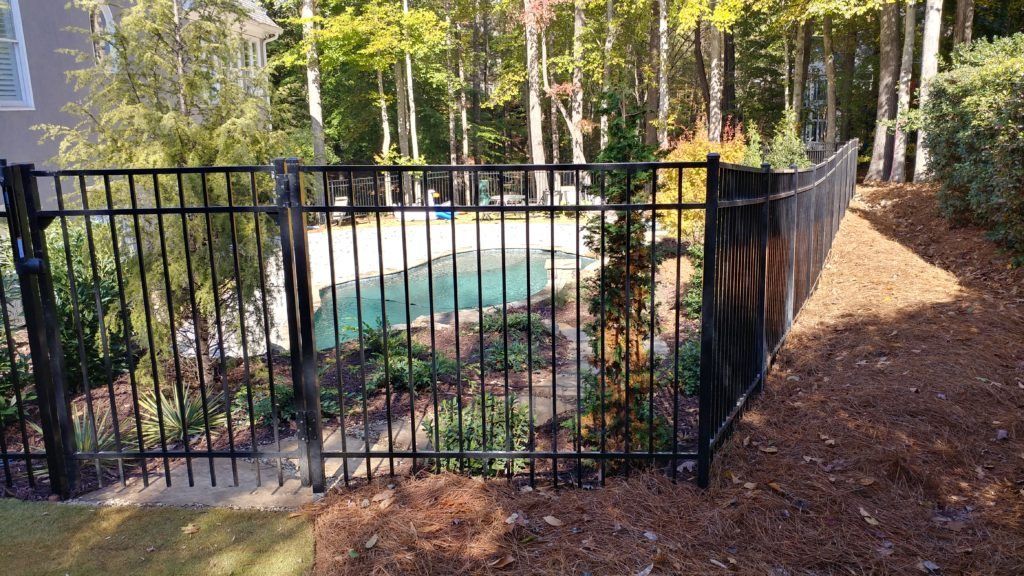
Aluminum is one of the most popular swimming pool fence materials because it combines safety, durability, and low maintenance. A powder-coated aluminum fence resists rust, corrosion, and damage from pool chemicals, making it especially well suited for humid climates such as Georgia.
A powder-coated aluminum fence resists rust, corrosion, and damage from pool chemicals, making it especially well suited for humid climates such as Georgia. Unlike wood, aluminum does not need staining, sealing, or repainting, and occasional cleaning with soap and water is usually enough to keep it looking new.
Another major advantage is visibility. The open picket design allows parents to monitor children in and around the pool area while still creating a secure barrier. Many aluminum systems are designed without horizontal footholds, which helps reduce climbing risks. Homeowners can also choose from different heights, colors, and decorative styles to match modern, traditional, or luxury landscapes.
Vinyl (PVC) Pool Fence
Swimming pool vinyl fence materials are an excellent choice for homeowners who want privacy and minimal upkeep. Vinyl fencing is made from durable PVC that will not rot, rust, or attract termites. High-quality UV-resistant vinyl is designed to withstand years of sun exposure without significant fading or cracking, which is important for outdoor pool environments.
One of the biggest benefits of vinyl is the solid-panel design. It blocks views from neighboring properties and creates a quieter, more secluded pool area. Vinyl fences are available in several styles, including privacy, semi-privacy, and decorative panel designs. Cleaning is simple and usually requires only water and a mild detergent. Although the upfront cost is often higher than wood, many homeowners find that the lower maintenance requirements and long service life make vinyl a cost-effective investment over time.
Mesh Pool Fence Material
Mesh pool fence material is widely considered one of the safest options for families with young children. The tightly woven mesh fabric is difficult to climb, and most systems are installed with self-closing, self-latching gates to help prevent unsupervised access to the pool. Because the fence is see-through, parents can maintain clear visibility into the pool area from the patio, deck, or house.
A major advantage of mesh fencing is that it can be removable. Homeowners who use their pool seasonally can temporarily take down sections of the fence when adult supervision is available and reinstall them when additional protection is needed. Modern mesh systems are made from UV-resistant materials that hold up well in sun, rain, and changing temperatures.
While mesh fences provide less privacy than vinyl or wood, they offer exceptional safety, good airflow, and a lower installed cost than many permanent fencing options. For households with toddlers or visiting grandchildren, mesh is often the preferred child-safety solution.
Wood Pool Fence
Wood remains a classic and attractive option for pool fencing because it provides a warm, natural appearance that blends well with gardens, patios, and traditional landscapes. Cedar, redwood, and pressure-treated pine are among the most common choices for residential pool fences. Wood is also highly customizable, allowing homeowners to select different heights, board styles, lattice tops, and decorative trim details.
Privacy is one of wood’s strongest advantages. A solid wood fence can completely block views into the pool area and create a more intimate backyard environment. However, wood requires more maintenance than aluminum, vinyl, or mesh. To prevent moisture damage, warping, rot, and insect problems, it should be sealed or stained regularly. With proper maintenance, a quality wood fence can last for many years and add significant visual character to the property.
Swimming Pool Metal Fence Materials Compared
When comparing swimming pool metal fence materials, aluminum is usually the best choice for most residential pools because it offers the best balance of durability, safety, visibility, and maintenance. Steel fencing is stronger and heavier, making it suitable for high-security applications, but it may require additional protection against corrosion. Wrought iron provides a premium, elegant appearance and is often used on luxury properties, though it is typically the most expensive option and requires periodic maintenance to prevent rust.
For most homeowners, powder-coated aluminum delivers the lowest long-term maintenance cost while still meeting common pool safety requirements and providing an attractive, modern look.
If you are comparing materials for a new installation, see our pool fence installation services in Atlanta. Homeowners considering a low-maintenance option can also explore our aluminum fence installation and vinyl fence installation services.
Aluminum Commercial Pool Fence Material
Aluminum commercial pool fence material is commonly used around apartment complexes, hotels, HOA pools, schools, and community recreation facilities. Commercial-grade aluminum fencing is designed to withstand heavy daily use while maintaining a professional appearance for many years. The powder-coated finish resists corrosion caused by moisture, chlorine, and other pool chemicals, which helps reduce maintenance costs for property owners and managers.
Commercial systems are typically available in taller heights, thicker pickets, and stronger rails than residential versions. They can also be paired with self-closing, self-latching, and lockable gates to help meet local safety and code requirements. Because aluminum is lightweight yet strong, installation is often more efficient than steel or wrought iron. For properties that need a durable, code-compliant, and visually appealing pool barrier, commercial-grade aluminum is usually the most practical long-term solution.
Pool Fence Cost Comparison
Estimated Installed Cost per Linear Foot (Atlanta, 2026)
| Material | Installed Cost |
| Mesh | $15–25 |
| Aluminum | $25–45 |
| Vinyl | $30–50 |
| Wood | $20–40 |
| Wrought iron | $50–100+ |
Installed costs vary by location and design
Which Material Lasts the Longest?
Powder-coated aluminum typically lasts 20-30+ years, vinyl 20-30 years, mesh 10-15 years, and well-maintained wood 10-20 years.
Georgia Pool Fence Basics
Local pool codes may vary, but many jurisdictions require a barrier of at least 48 inches with a self-closing, self-latching gate. Always verify requirements with your local authority having jurisdiction. For the most accurate requirements, consult your local building department or a licensed pool-fence installer.
Best Pool Fence by Need
| Best Overall | Aluminum Durability + safety + low maintenance |
| Best for Children | Mesh Climb-resistant and highly visible |
| Best for Privacy | Vinyl Solid panels and minimal upkeep |
| Best for Budget | Pressure-treated wood Lower upfront cost |
| Best for Commercial Pools | Commercial-grade aluminum |
How to Choose the Right Pool Fence in 60 Seconds
- Need maximum safety for toddlers → Mesh
- Need low maintenance + long lifespan → Aluminum
- Need full privacy from neighbors → Vinyl
- Need natural or custom design → Wood
- Need HOA, apartment, or hotel fencing → Commercial-grade aluminum
Frequently Asked Questions
What is the safest pool fence material for children?
Mesh pool fencing is generally considered the safest because it is difficult to climb and allows parents to maintain visibility of the pool area.
Is aluminum or vinyl better for a pool fence?
Aluminum is better for durability and visibility, while vinyl is better for privacy and low maintenance.
How long does an aluminum pool fence last?
A powder-coated aluminum pool fence can last 20-30 years or more with minimal maintenance.
Can vinyl pool fencing fade in the sun?
High-quality UV-resistant vinyl fencing resists fading, though lower-quality products may discolor over time.
What is the cheapest pool fence material?
Pressure-treated wood is usually the lowest upfront-cost option, but it often has higher long-term maintenance expenses.
Do mesh pool fences meet Georgia pool codes?
Many mesh systems can meet code when installed with approved self-closing, self-latching gates, but local requirements should always be verified.
What fence height is required around a pool in Georgia?
Many jurisdictions require a barrier of at least 48 inches, but local building and pool codes may vary.
What is the best commercial pool fence material?
Commercial-grade aluminum is the most common choice because it is corrosion-resistant, durable, and widely accepted for code-compliant installations.
Local Experience
FenceWorks of Georgia installs residential and commercial pool fences throughout the Atlanta area, including aluminum, vinyl, mesh, and wood systems designed to meet local safety requirements and HOA standards.
Final Recommendation
For most Atlanta homeowners, aluminum is the best all-around pool fence material because it combines safety, durability, low maintenance, and long-term value. Families with toddlers often prefer mesh fencing for its climb-resistant design, while vinyl fencing is the top choice for privacy and wood fencing is best for a natural, customized look.
If you’re unsure which material is right for your property, compare your priorities—safety, privacy, maintenance, appearance, and budget—and choose the fence that solves the most important problem first. A properly installed, code-compliant pool fence protects your family, improves usability, and can increase the value of your home. FenceWorks of Georgia specializes in helping homeowners in Atlanta choose and install the perfect pool fence.